

With some Canadians skipping the United States in favour of destinations further afield, countries like Peru, Bolivia, and Argentina are attracting more attention. Bolivia is the cheapest of the three, although travellers from Canada will find all of them relatively affordable.
5 ways to stay on budget in South America
1. Compare tours after you arrive instead of booking months ahead
2. Carry cash, especially U.S. dollars for Bolivia
3. Use a no-FX fee credit card where cards are accepted
4. Take overnight buses to save on transportation and accommodation
5. Read tour reviews before choosing the cheapest option
Preparing for a South American trip
When you’re traveling throughout North America, it’s generally a good idea to book as much as you can in advance—like concert tickets or a table at a sought-after restaurant. But in parts of South America, the informal culture means it’s often best to physically be there and suss things out before parting with your cash.
There is an exception to this rule: travel arrangements, and sometimes accommodation. Airfares can get pricier as you near the flight date, so it’s a good idea to secure these in advance.
You’ll also want to bring a lot of cash. In South America, and especially in Bolivia, it’s a good idea to bring US dollars, as Bolivia’s “official” exchange rate gives you roughly 30% less than if you trade with cash.
What does a South America trip cost?
Budget traveller: $40–$70 CAD/day
Comfortable traveller: $80–$150 CAD/day
Higher-end traveller: $200+ CAD/day
Peru: Lima and Cusco
The Peruvian capital of Lima is a solid place to start a South American trip, given that flights can be extremely affordable. I travelled from Toronto Pearson with a stopover in the Dominican Republic for around $250 CAD.
The city is split into different districts, each with its own flavour. The central areas near Cercado de Lima are hustling and bustling. Other districts near the coast are extremely safe, photogenic, and bohemian—especially Miraflores and Barranco. If, like me, you’ve lived near a lake for so long that you’ve almost forgotten what the seashore looks like, it’s a great change of pace to swim or surf on the coast and be buffeted by the waves.
In Lima, you’ll have access to high-end food at a fraction of the cost of in Canada. A personal favourite was Casa Tambo, where you’ll get a quality array of Peruvian dishes at reasonable prices. If you’re hostelling it’s also very cheap—I stayed in a private room for just $22 per night.
Then there’s Cusco (also spelled Cuzco), which is a gateway to tourist hotspots like Machu Picchu, the Rainbow Mountain, and the Peruvian sections of the Amazon Rainforest, like Manu. The city has an elevation of 3,399 meters (11,152 feet) above sea level and it can be hard to deal with when you first arrive—especially if you fly in. In my first few days in Cusco, I felt like there was a weight pressing on my head and it took days to gradually wear off. Staying in the more touristy Cusco cost me roughly double, at $42 per night, though it’s generally seen as a cheaper place to be than Lima.
Featured travel credit cards

Scotiabank Gold American Express Card

American Express Cobalt Card

MBNA Rewards World Elite Mastercard
While credit cards are accepted at many hotels and restaurants in major tourist areas, cash remains essential for smaller restaurants, markets, and local transportation. If you’re not using cash, it’s a good idea to use a credit card with no foreign transaction fees to avoid the typical 2.5% foreign exchange fee charged by many Canadian cards. It’s also not unusual for Peruvian shops and restaurants to charge a surcharge of around 5-6%, so if in doubt bring more cash.
Why pre-booking everything isn’t a good idea
Cusco is where I learned a hard lesson: you shouldn’t book too much in advance in Peru.
Prior to leaving Toronto, I paid a $250 USD deposit for a rainforest trip. It was part of a three-day trip costing over $1,000 USD. When I arrived, I realized how much you can actually get for your money in Peru. I went to a hole-in-the-wall tourism agency that offered a very similar trip for $250 USD all in—and I realized that I’d been ripped off.
Unfortunately, I didn’t end up visiting the rainforest at all since the experience left a sour taste.
I did refrain from booking Machu Picchu in advance, which was a good call since I ultimately booked a trip for a quarter of the price advertised online—for just $110 USD in cash. This included a bumpy four-hour bus ride there and back, multiple meals, a hotel stay, a ticket to the Machu Picchu site, and a wizened tour guide who knew the site like the back of his hand. You win some, you lose some.
Machu Picchu
Going to Machu Picchu is worth the hype. The first part of my tour involved walking alongside a railway track with monolithic mountains on the horizon. Every so often a train would trundle by and you’d have to move to the side of the trail.
After staying overnight at Aguas Calientes, a charming town built into the base of the mountain, you’re able to walk up to Machu Picchu via a staircase carved into the mountain. The lost city gives you a real picture of human ingenuity—the buildings are earthquake resistant and feature aqueducts and structures that track the time of day.
If you’re trying to keep costs down, it’s worth comparing what each tour includes. There are plenty of inexpensive packages that cover transportation, accommodation, meals, and entry, so you’ll typically save money versus booking each component separately. The trade-off is time: the cheaper routes often involve a long bus journey and the aforementioned walk along the railway tracks, rather than the more expensive train.
The Rainbow Mountain
The Rainbow Mountain is also worth checking out. Be warned: the lack of oxygen makes it a difficult walk, even though it’s only around two hours to the summit. The reward for getting to the top is a breathtaking 360-degree view of the vast Andes mountains and a beautiful view of the natural formations painted in varying shades of red, brown, and green.
Rainbow Mountain is one of the cheaper day trips from Cusco and offers great value if you like hiking. Remember to budget for essentials like water, snacks, and sunscreen. I learned the hard way that UV exposure is stronger at over 5,000 metres than most people expect!
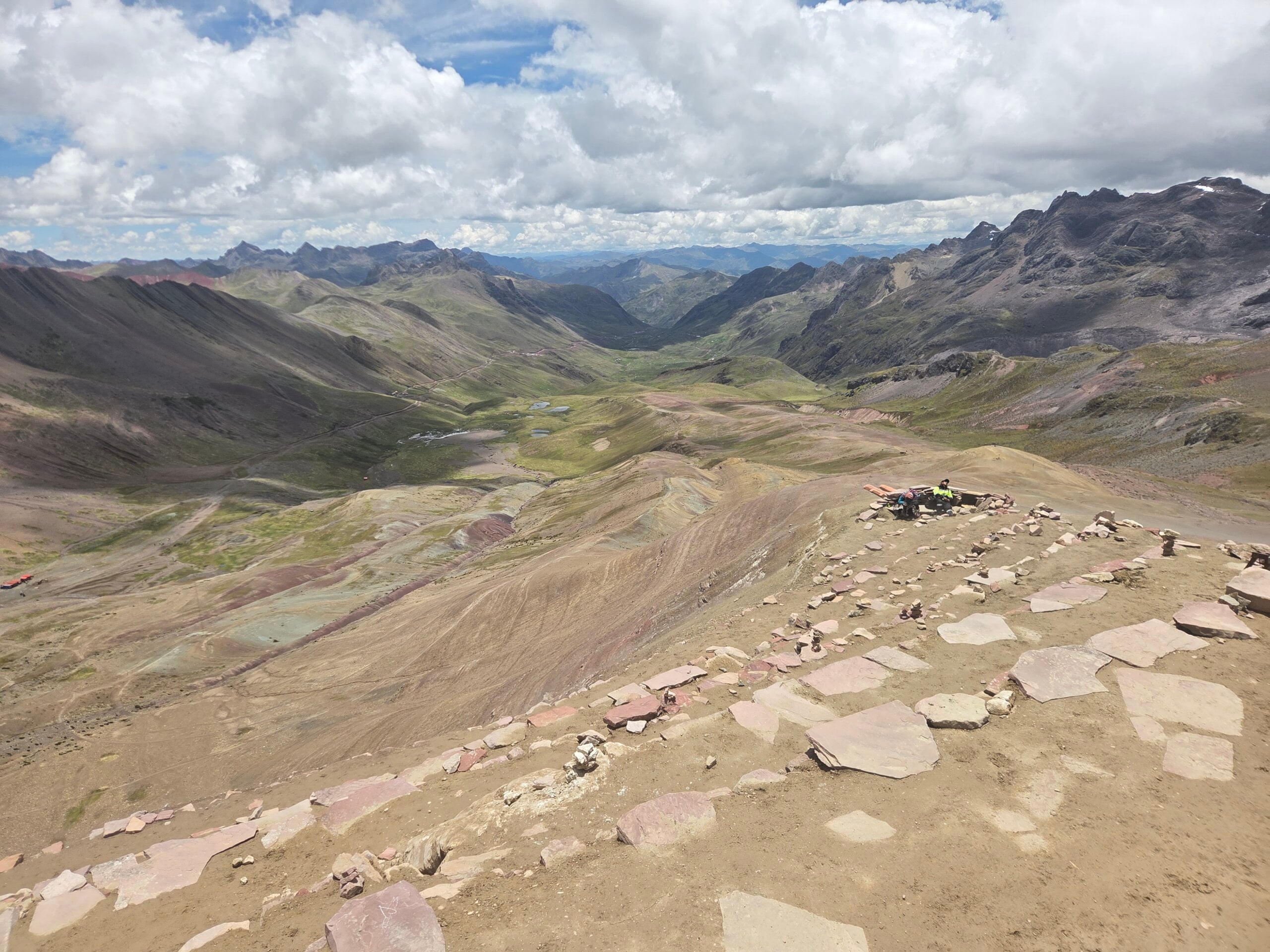 Photo by Ryan Bembridge
Bolivia
From Cusco, I ventured on to La Paz, one of the two capital cities of Bolivia. Flying the route can save a full day of travel but often costs several hundred dollars if booked late. Overnight buses are cheaper and let you save on a night of accommodation, though they aren’t luxurious. If you’re travelling slowly, the bus usually offers better value.
Getting Bolivian currency the smart way
Bolivia is a more affordable country than Peru, though just how affordable depends on how you get the local currency, bolivianos.
In La Paz, there are a series of exchange houses where you get bolivianos at a far better rate than the state-controlled exchange rate, providing you use cash. Bolivianos are pegged to $6.96 US dollars, but in La Paz exchange houses, it’s normal to get around 10 bolivianos per $1 USD. Bring crisp $50 and $100 USD bills for the best rates.
La Paz, the surreal mountain city
La Paz is a city built in between mountains, and one of the best bargains is its cable car system, which acts as both public transit and a sightseeing attraction. For the price of a short ride, you get panoramic views across the city without paying for an observation deck or guided tour.
A few other La Paz highlights include:
Parque del Monticulo, a park featuring breathtaking views of the city, and surrounding mountains Radio-Bar, a local spot featuring Bolivian music panpipes that felt fresh and modern El Carnero, a no frills spot offering lamb off the boneLa Paz is an exciting, bustling place to be. As long as you are able to handle walking up steep hills, it’s certainly worth a visit.
Uyuni Salt Flat and southern Bolivia
The nature in southern Bolivia feels out of this world—and if you’re visiting Bolivia on a budget, a tour of the Salar de Uyuni should be near the top of your list.
Salar de Uyuni is the world’s largest salt flat. Essentially, it’s a desert of salt that naturally forms into hexagonal patterns. During the rainy season, a thin layer of water transforms the salt flat into a giant mirror, an effect you’d think was created by an Instagram filter if you didn’t see it with your own eyes.
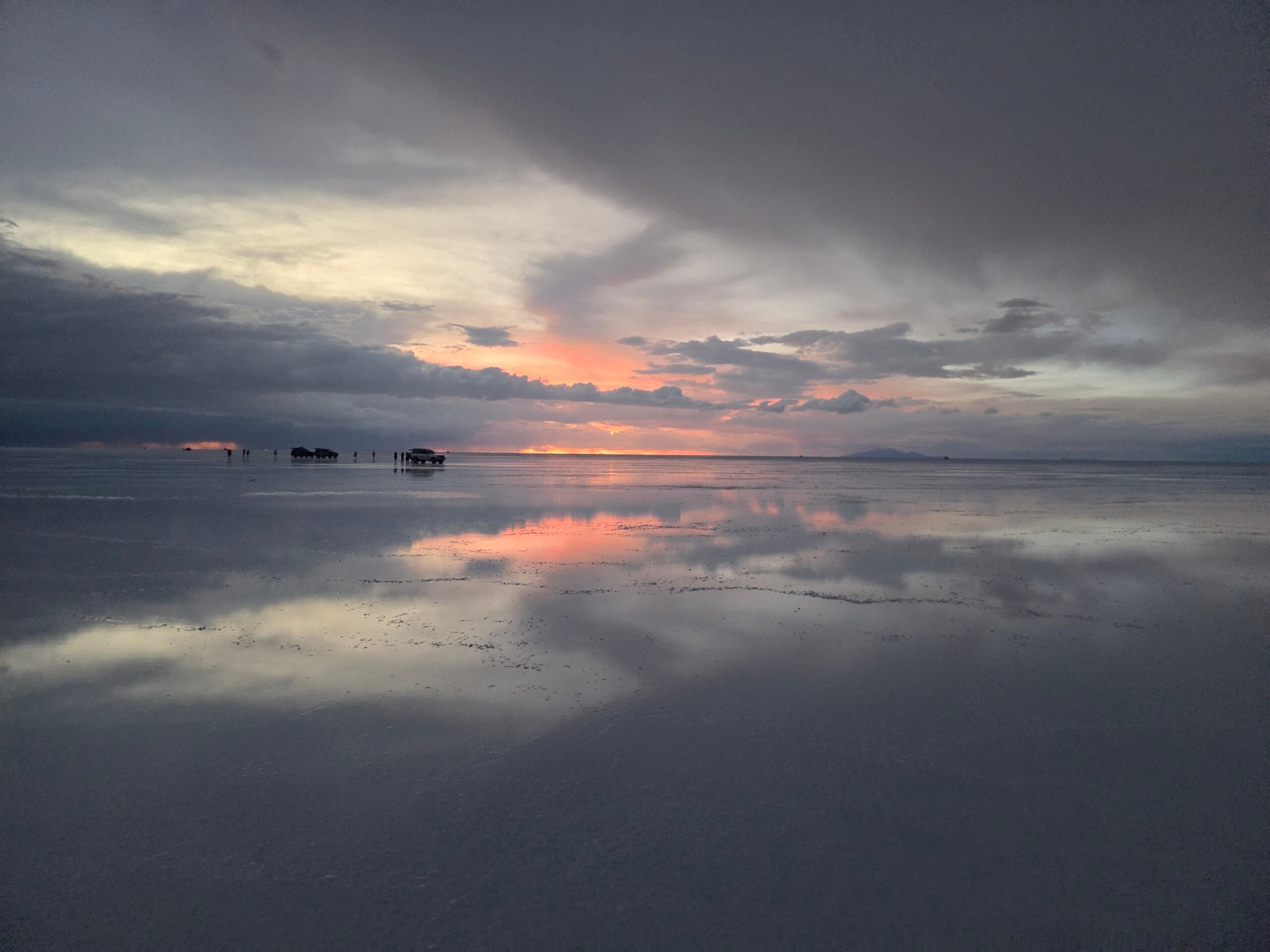 Photo by Ryan Bembridge
Most travellers choose one-, two- or three-day tours that include transportation, accommodation, and meals. Before booking, don’t just choose the cheapes option. Compare what’s included and try to look at reviews. Paying a little more for a reputable operator can mean safer vehicles, better accommodation, and higher-quality food.
The most affordable way to reach Uyuni is by overnight bus from La Paz, with multiple companies running daily services. Travelling overnight costs less than flying and saves you another night of accommodation. If your preferred bus is sold out, don’t be afraid to ask around at the terminal in case a last-minute seat is available.
Budget for Bolivia’s hidden costs
Bolivia is one of the least expensive countries in South America, but small charges can add up if you aren’t prepared. Public washrooms almost always charge a small fee, some bus terminals collect entrance or departure fees, and I even found that some businesses charge to use their Wi-Fi. None of these costs are significant on their own, but they’re worth factoring into your budget.
Buenos Aires, Argentina
After the mountains of Peru and Bolivia, Buenos Aires offers a different experience. The Argentine capital is a vibrant city with a European feel, with neighbourhoods influenced by Italian, Spanish, and French architecture. Everyday expenses in Buenos Aires remain surprisingly affordable for Canadian travellers, though.
Food is one of the city’s biggest bargains. You can find empanadas on nearly every street corner for around $2 CAD each, while high-quality steak dinners cost a fraction of what you’d pay in Canada. Even craft beer and wine are inexpensive, so it’s easy to enjoy the fantastic food scene without blowing your budget.
Accommodation is more expensive than in Peru or Bolivia, but is still less than what you’d pay in major Canadian cities. I paid about $118 CAD per night for a private room in a hostel since I wanted the social experience. If you’re staying longer, you might be able to find savings with an Airbnb or apartment rental instead.
Choose your splurges
When you’re in Buenos Aires, it’s a good idea to spend selectively. If you’re a futbol fan, perhaps budget for a Boca Juniors or River Plate match. Tickets can be difficult to secure and tourist packages often cost around $120 USD. It may not be a budget activity, but the atmosphere is electric and it’s an experience that many visitors find is worth the extra expense.
If that’s not your thing, you have plenty of options that cost little to nothing. Wander in neighbourhoods like Palermo, watch live music along Avenida Corrientes, and stop in lively bars like El Boliche de Roberto. I even took an introductory tango class through Airbnb Experiences, which was an affordable way to experience one of Argentina’s best-known traditions.
Final words
South America may not be the cheapest destination to reach from Canada, but your travel budget can stretch surprisingly far once you arrive. Staying flexible and knowing where to splurge versus save can help you make the most of your time and money. And don’t forget the essentials: bring lots of cash, compare your options carefully, and don’t forget your sunscreen.
Get free MoneySense financial tips, news & advice in your inbox.
The post 3 affordable South American destinations to stretch your travel dollar appeared first on MoneySense.




 Bengali (Bangladesh) ·
  English (United States) ·