
 2 hours ago
3
2 hours ago
3 
This publication is sponsored and written by a third party. Coindoo does not endorse or assume responsibility for the content, accuracy, quality, advertising, products, or any other materials on this page.
The crypto market is moving quickly, and market participants are reviewing projects with active development, technical upgrades, and shifting market narratives. Right now, a select group of projects is capturing attention from larger holders and retail traders because of technological upgrades, market repricing, and structured program windows.
For those tracking leading projects, understanding where infrastructure, adoption, and utility are developing has become increasingly important. This listicle breaks down four crypto coins that continue appearing in current market discussions.
1. BlockDAG (BDAG): AI Capabilities Support a Valuation Update
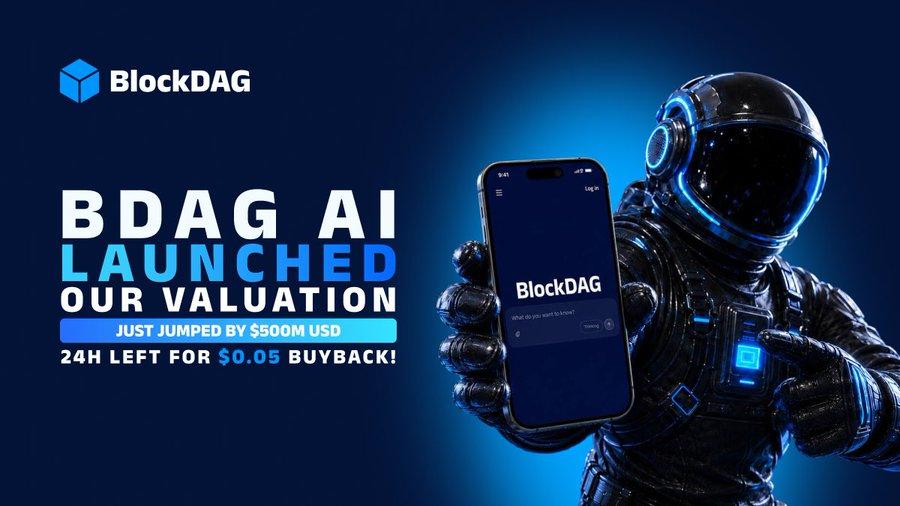
BlockDAG has entered current market discussions with the live launch of its AI capabilities, which the project says contributed to a $500 million valuation increase. This upgrade introduces machine-learning tools to the ecosystem, with the goal of improving smart contract optimization and transaction efficiency.
The project is also undergoing a major upgrade targeting 7,000 transactions per second within the next three days. Furthermore, the upcoming BlockDAG Futures and Spot Exchange is scheduled to launch in two weeks, adding another planned layer of utility and liquidity access for users.
The current program includes a $0.05 buyback offer under the project’s stated terms. BDAG is currently priced at $0.00000044, and buyers can also review the special World Cup Bonus, which offers an additional 50% extra BDAG coins under the campaign conditions.

Market participants are watching how these updates develop as BlockDAG continues expanding its ecosystem. Its AI rollout, planned exchange launch, network-speed upgrade, and promotional structure have helped keep the project visible among crypto coins being discussed in 2026.
2. Arbitrum (ARB): Ethereum’s Layer 2 Available at a Lower Market Level
Arbitrum remains a foundational network for decentralized finance, standing alongside Base as one of Ethereum’s most active Layer 2 networks by total value locked. Utilizing optimistic rollups, the network reduces gas fees and accelerates transaction speeds while inheriting Ethereum’s security framework. Major decentralized finance protocols like Uniswap, Aave, and GMX depend heavily on its infrastructure. Beyond traditional applications, the ecosystem has also moved into real-world asset tokenization.
The native token peaked at $2.40 in January 2024 but has retraced sharply to trade between $0.075 and $0.09 by mid-2026, marking a deep 95% to 97% drawdown from its record highs. This price weakness contrasts with the network’s ongoing utility. Arbitrum has expanded enterprise adoption through its DAO STEP treasury program, increasing tokenized Treasury exposure through major financial players like Franklin Templeton, Spiko, and WisdomTree.
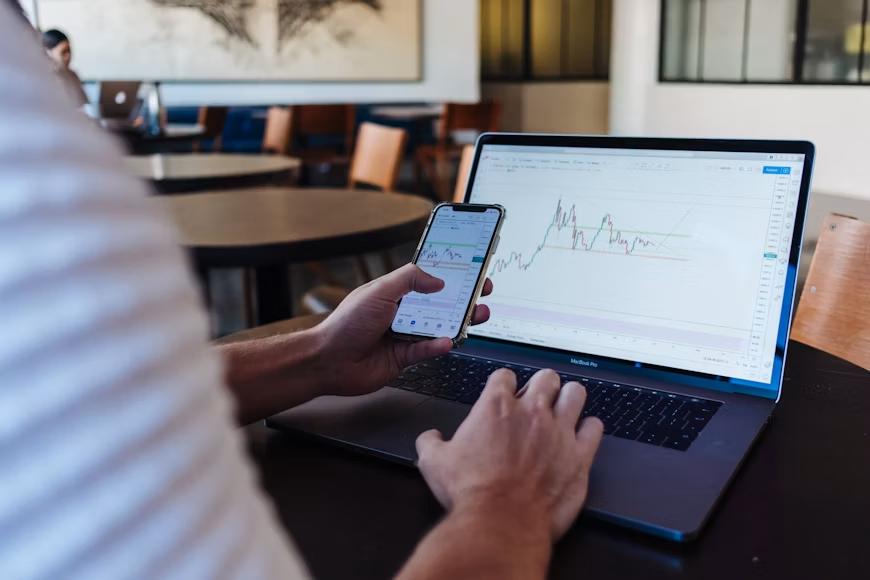
With billions in total value locked, Arbitrum remains one of the crypto coins being reviewed by market participants looking at Ethereum scaling, DeFi infrastructure, and tokenized asset activity.
3. Hedera (HBAR): Enterprise-Grade Infrastructure Preparing for a Quantum Future
Hedera utilizes a hashgraph consensus algorithm designed to deliver fast finality and low transaction fees. Rather than relying on anonymous miners, the network uses a governing council of global organizations, including Google, IBM, Boeing, and LG, to run its nodes and support institutional trust. Through virtual voting, the system validates transactions efficiently while maintaining a minimal carbon footprint. The platform actively powers carbon credit markets, stablecoin deployments, and tokenized assets.
While the asset hit a historical peak of $0.5692 in 2021, mid-2026 data shows it trading around $0.07 to $0.08, down about 50% over the past year. Despite the price slump, Hedera maintains a market cap of around $3 billion, keeping its position among larger digital assets. The network is actively rolling out a post-quantum transition path, integrating hybrid event signing and post-quantum TLS ahead of future cryptography requirements.
HBAR remains part of current discussions because of its enterprise governance model, security-focused roadmap, and institutional infrastructure positioning.
4. Algorand (ALGO): Institutional Execution Speed Combined With Green Credentials
Algorand leverages a Pure Proof-of-Stake consensus mechanism designed for rapid transaction execution and low fees. Capable of handling thousands of transactions per second with uninterrupted uptime, the network operates as a carbon-negative blockchain through its partnership with ClimateTrade. This environmental compliance has helped support interest from ESG-minded institutions, digital asset pilots, and tokenized-bond projects globally.
The native asset reached an all-time high of $3.56 in 2021, but a broader altcoin correction brings its mid-2026 price near $0.09, representing a 45% to 50% year-over-year decline. To maintain its competitive edge, Algorand has committed to a technical roadmap targeting complete quantum resilience by the end of 2027 as global cryptography regulations continue evolving.
Backed by real-world pilots and ongoing developer activity, Algorand remains one of the crypto coins being reviewed by participants interested in sustainable blockchain infrastructure, fast settlement, and institutional-grade execution.
Key Insights
Arbitrum, Hedera, and Algorand each offer exposure to established infrastructure themes. Arbitrum focuses on Ethereum Layer 2 scaling and tokenized assets. Hedera emphasizes enterprise governance, fast finality, and post-quantum readiness. Algorand combines execution speed, sustainability, and institutional use cases.
BlockDAG is being discussed through a different lens, with its AI ecosystem launch, reported $500 million valuation increase, planned exchange rollout, and network-speed upgrade on the near-term roadmap. The project’s $0.05 buyback offer and 50% World Cup Bonus remain tied to the project’s stated terms and campaign conditions.

For market participants reviewing crypto coins in 2026, the comparison comes down to infrastructure, utility, adoption, and execution. Future outcomes will depend on liquidity, market conditions, user adoption, technical delivery, and each project’s ability to complete its stated roadmap or program terms.
This publication is sponsored and written by a third party. Coindoo does not endorse or assume responsibility for the content, accuracy, quality, advertising, products, or any other materials on this page. Readers are encouraged to conduct their own research before engaging in any cryptocurrency-related actions. Coindoo will not be liable, directly or indirectly, for any damages or losses resulting from the use of or reliance on any content, goods, or services mentioned.
The post BlockDAG, Arbitrum, Hedera, and Algorand Compared Across 2026 Crypto Market Trends appeared first on Coindoo.




 Bengali (Bangladesh) ·
  English (United States) ·