
 5 hours ago
3
5 hours ago
3 

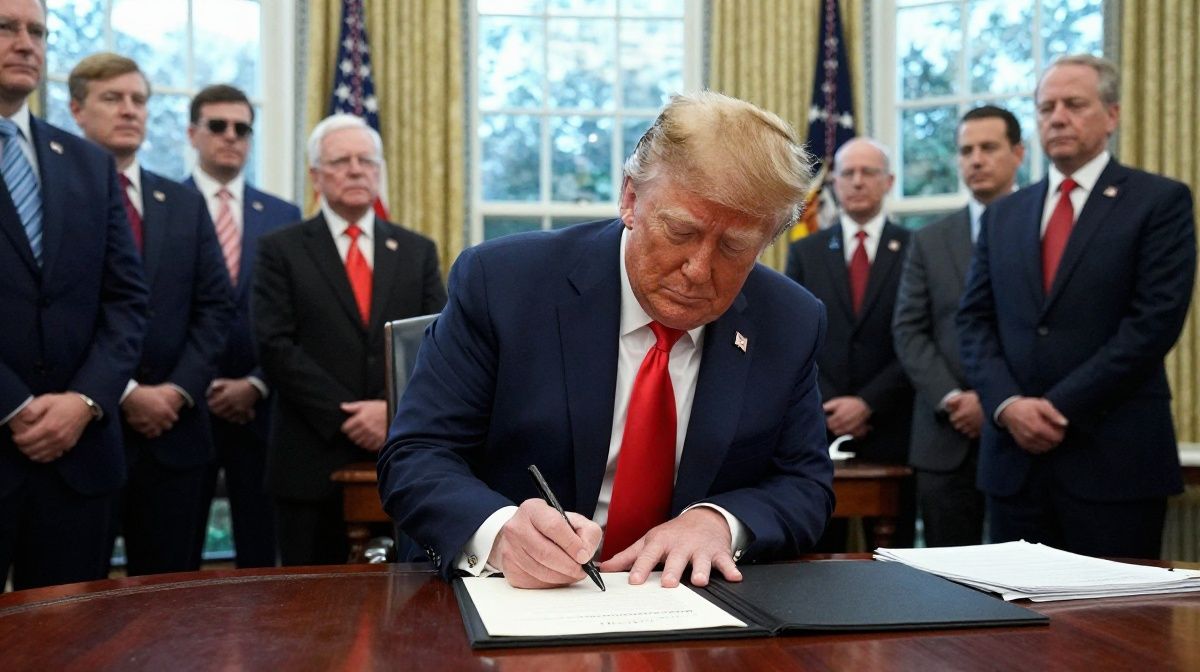
A federal judge on Monday threw out (PDF File) the Trump administration's $100,000 fee on new H-1B visa petitions, ruling that the charge was an illegal tax the president had no power to impose.
Trump's proclamation was set to expire after 12 months unless renewed, but the court's ruling ends it now. It's expected that the administration will appeal to the First Circuit Court of Appeals, where the "is it a tax or a fee" question will be argued again. Until a higher court says otherwise, new H-1B petitions revert to their prior fee structure.
Would you like to save this?
Driving The News
U.S. District Judge Leo Sorokin vacated the policy in its entirety and declared it unlawful. He sided with 20 states, led by California, that sued over the fee after President Trump created it through Proclamation 10973 in September 2025.
The core of the ruling: the payment was a tax dressed up as a regulatory charge, and the Constitution gives the power to tax to Congress, not the president. This is a very similar argument to the ones against the tariffs.
"The substance and application of the $100,000 payment reveal that it is a tax, regardless of what the payment is called," Sorokin wrote.
By The Numbers
$100,000: the per-petition fee created by the September 2025 proclamation$960 to $7,595: the combined statutory and regulatory fees a new H-1B petition cost before the proclamation85: the number of $100,000 payments employers had actually made through mid-February, per court filings, a sign of how few were willing or able to payWhy It Matters
The H-1B program lets U.S. employers hire foreign workers in specialty occupations that require at least a bachelor's degree, typically for up to six years. Colleges, universities, and nonprofit research organizations are heavy users, and they're exempt from the program's annual cap and can file petitions year-round.
A $100,000 surcharge on every new petition put that pipeline at risk for schools trying to recruit faculty, researchers, and other specialized staff, on top of teacher and healthcare staffing shortages the states cited in their complaint.
The Other Side
The administration argued the fee was a lawful "regulatory payment" backed by the Immigration and Nationality Act, which lets the president restrict the entry of foreign nationals deemed contrary to U.S. interests. The proclamation claimed the H-1B program had been used to undercut American wages, especially in STEM fields.
How This Connects
Immigration and visa policies are directly linked to higher education. Many colleges rely on foreign graduate students to boost revenue, while at the same time recruiting foreign faculty and researchers to boost talent.
Universities lean on the H-1B program to staff classrooms and labs, and added hiring costs eventually filter into institutional budgets that already drive tuition higher year after year.
The College Investor has long tracked how rising college costs reshape what students borrow and how families plan. A six-figure hiring surcharge, had it stuck, would have been one more pressure on already-strained higher education budgets or continued to drive the higher education brain drain.
Don't Miss These Other Stories:
Editor: Colin Graves
The post Court Strikes Down Trump’s $100,000 H-1B Visa Fee appeared first on The College Investor.


 Bengali (Bangladesh) ·
  English (United States) ·