

It was still a ways off, but I'd kind of latched on to '2028' being the end in sight of the raging memory supply crisis. However, SK hynix CEO Kwak Noh-Jung reckons we should only be so lucky.
"We forecast that next year will be the worst year in the industry's history from the supply perspective," Kwak recently told Reuters. Not only is 2027 apparently set to be even worse, but Kwak also predicts the situation won't improve for years beyond the 2028 date I'd been holding on to, when SK hynix, Micron, and Samsung are all set to complete capacity expanding builds.
"Our customer demand continues to go up, while our capacity has limitations," Kwak said, "We still forecast that customer demand will remain higher than our supply capacity even beyond 2030. But we are doing our best to solve the problem."
The company also began trading on Nasdaq last Friday, with a US megalisting of shares that was seven times oversubscribed. SK hynix said then that it wants to use the resulting capital for at least two more construction projects in South Korea: a fabrication hub in Yongin, as well as an advanced packaging facility in Cheongju.
Kwak also said that the company is considering a number of other global sites for future wafer fabrication investment. He said, "The US, Japan, and Southeast Asia are all under consideration. Nothing has been decided yet. We are evaluating which location can provide the greatest business advantage."
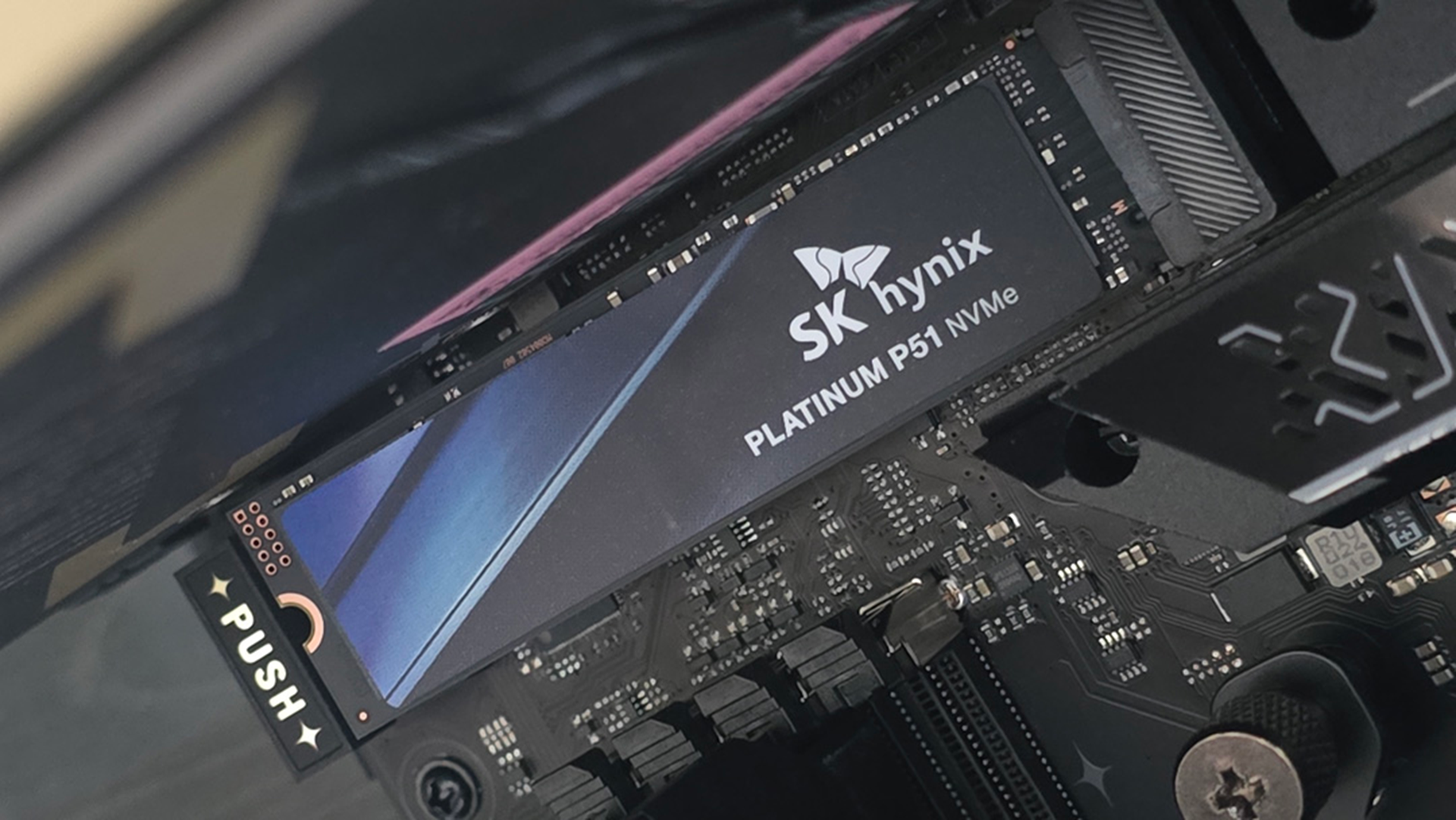
The tech stock market is still incredibly volatile though; while SK hynix shares were up 13.3% at $168.85 on the Nasdaq Friday afternoon, the company's shares then plunged by 15% in Seoul on Monday. According to Reuters, this marks the company's biggest one-day decline in nearly 20 years. As for the company's US-listed shares come Monday morning, those dipped by 9.2% to $152.50.
What explains that dip? For one thing, analysts say that South Korea's recent multi-billion dollar investments in the AI chip industry, plus all of those other capacity-expanding builds I mentioned earlier, has heightened investor anxiety that tight memory supply may tip over into oversupply in the coming years. Jing Jie Yu, an equity analyst at Morningstar, said, "Our base case here is the fresh capacity in 2027 and 2028 coming up in earnest will improve supply dynamics, thereby leading to price erosion."
Furthermore, the AI bubble is arguably looking a bit strained. Morningstar's director, Lorraine Tan, said, "Despite accelerating artificial intelligence adoption, monetisation remains uncertain and profitability for key players, such as OpenAI, appears to be under pressure. Funding is also shifting toward debt or equity, raising concerns about the maintainability of current spending levels."
In other words, yes, the industry is hoovering up all the memory, but if AI spending fails to see a sensible return on that investment, or data centre build out calms down, the bubble may burst and there will be much less demand for all of that silicon.





 Bengali (Bangladesh) ·
  English (United States) ·