
 2 hours ago
7
2 hours ago
7 
The move is important because it is happening after a clear futures-market reset, not during an overheated leverage build-up.
Binance’s estimated leverage ratio for ETH futures has dropped from 0.99 at the start of the year to 0.62, a decline of about 37.4%. Across all exchanges, the same metric sits near 0.75 after briefly spiking close to 1.0 in early June before falling back.
That changes the read on the current breakout attempt. Traders are using less borrowed exposure, which means ETH is less vulnerable to forced liquidation cascades. At the same time, lower leverage also shows weaker speculative appetite, so price still needs real demand to confirm the move.
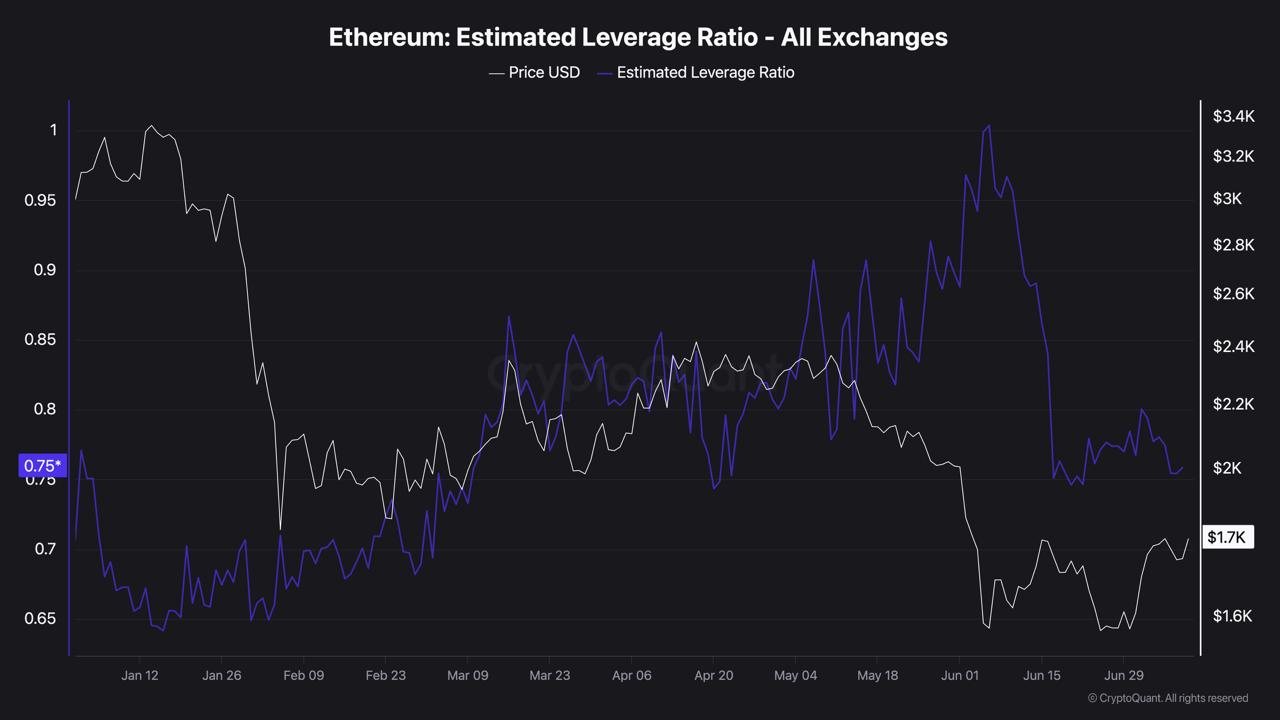 Ethereum’s Estimated Leverage Ratio across all exchanges throughout the first half of 2026.
The Breakout Test
The daily chart shows ETH pushing toward the 50-day simple moving average and nearby resistance. Bulls are trying to flip that area into support, but the move still depends on confirmation through a successful retest.
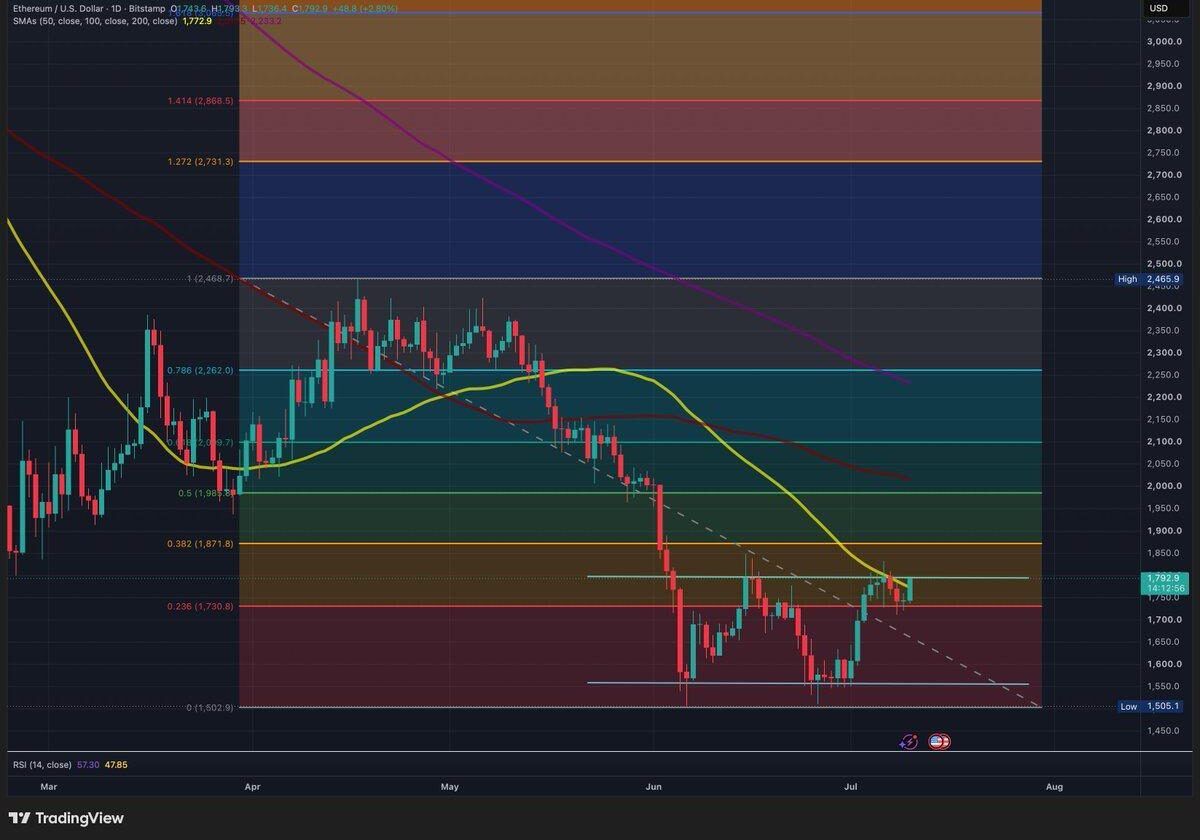 Daily technical analysis chart for ETH/USD, highlighting Fibonacci retracement levels and current price trends.
If ETH holds above the resistance zone and the 50-day SMA, the next upside level to watch is the 0.382 Fibonacci area near $1,871. That would strengthen the case that the market is moving out of its recent range rather than only reacting to a short-term bounce.
Yesterday’s candle showed hesitation, not a clean rejection. That matters because a stronger rejection candle would have suggested that sellers had immediately regained control. Instead, ETH paused near the breakout area. A bullish daily close above the previous high would improve the continuation setup.
Until then, the chart is in a test phase. Price has reached the important area, but buyers still have to prove they can defend it.
Why Deleveraging Matters Now
The derivatives backdrop is different from early June. Back then, leverage briefly surged near 1.0 across exchanges, making the market more vulnerable to sharp liquidation-driven moves. Now, the structure is less crowded.
Binance’s leverage ratio near 0.62 is below the all-exchange reading around 0.75, which suggests Binance traders have cut risk more aggressively than the broader ETH futures market.
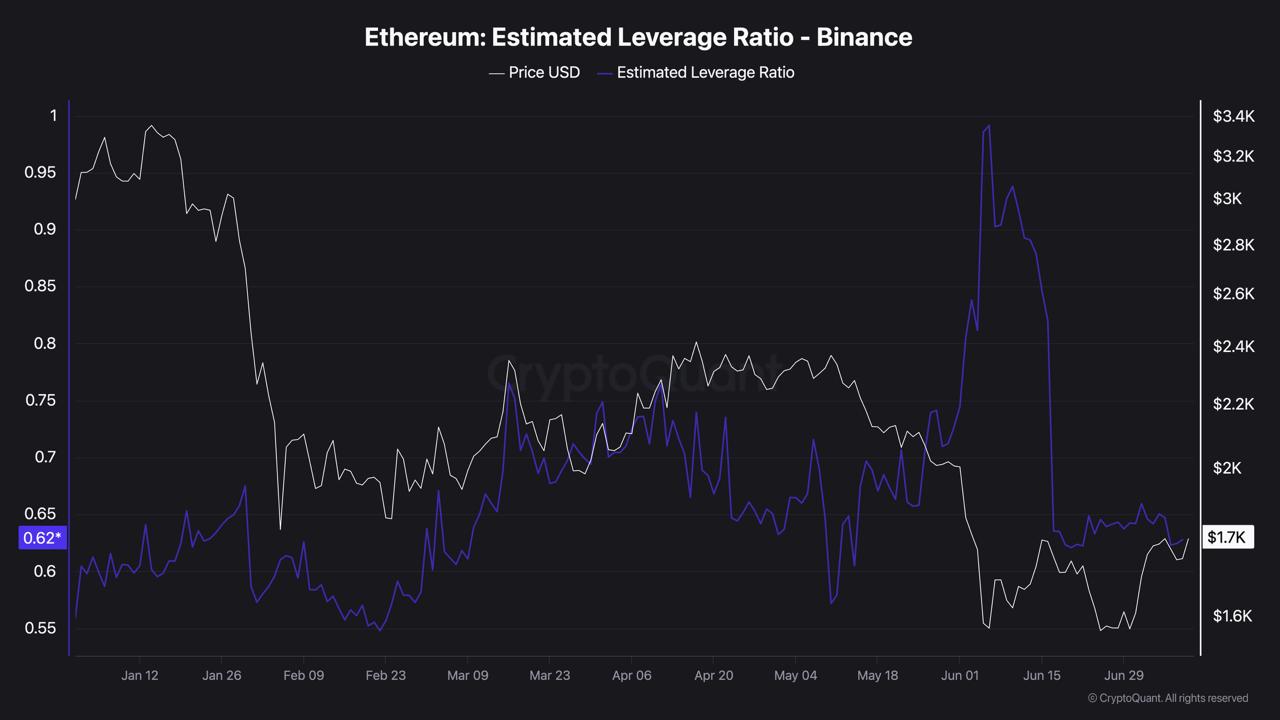 Ethereum Estimated Leverage Ratio on the Binance exchange as of July 2026.
This matters because a breakout from a lower-leverage base is usually cleaner than one driven by crowded futures positioning. If ETH moves higher while leverage stays contained, the rally is more likely to reflect spot demand or broader market support rather than a temporary squeeze.
The trade-off is that lower leverage also removes some of the fuel that can accelerate a fast upside move. ETH may have a healthier structure, but it still needs a catalyst. Spot buying, ETF inflows, macro relief, or stronger on-chain activity would matter more now because futures leverage is no longer carrying the setup.

The Risk If the Retest Fails
The risk is straightforward. If ETH cannot hold above the breakout zone, the move becomes another failed recovery attempt. In that case, traders would likely refocus on the lower part of the recent range and the prior swing lows.
Lower leverage would reduce the risk of a disorderly flush, but it would not prevent downside if demand remains weak. A cleaner futures market does not automatically create upside. It only means the next move is less likely to be driven purely by forced liquidations.
For now, Ethereum has a better foundation than it had during the early-June leverage spike. The market is less fragile, but the price still has to confirm the breakout.
The level to watch is the 50-day SMA and nearby resistance. A bullish close above the previous day’s high, followed by a successful retest, would strengthen the continuation case. A rejection would keep ETH inside a cautious range.
The key takeaway is simple: Ethereum’s futures market has deleveraged, but price still has to prove that buyers can hold the move without leverage doing the work.
The information provided in this article is for educational and informational purposes only and does not constitute financial, investment, or trading advice. Cryptocurrency markets are volatile and involve substantial risk. Readers should conduct their own research and consult with a qualified financial advisor before making any investment decisions.
The post Ethereum Tests $1,800: Deleveraging Could Validate The Move appeared first on Coindoo.





 Bengali (Bangladesh) ·
  English (United States) ·