

 (Photo Credit: Lionsgate)
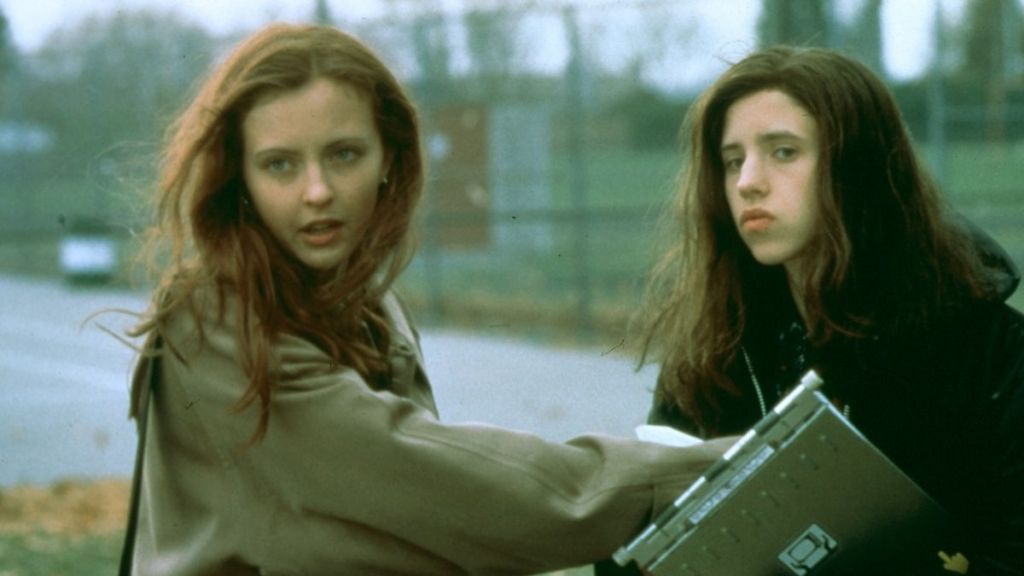
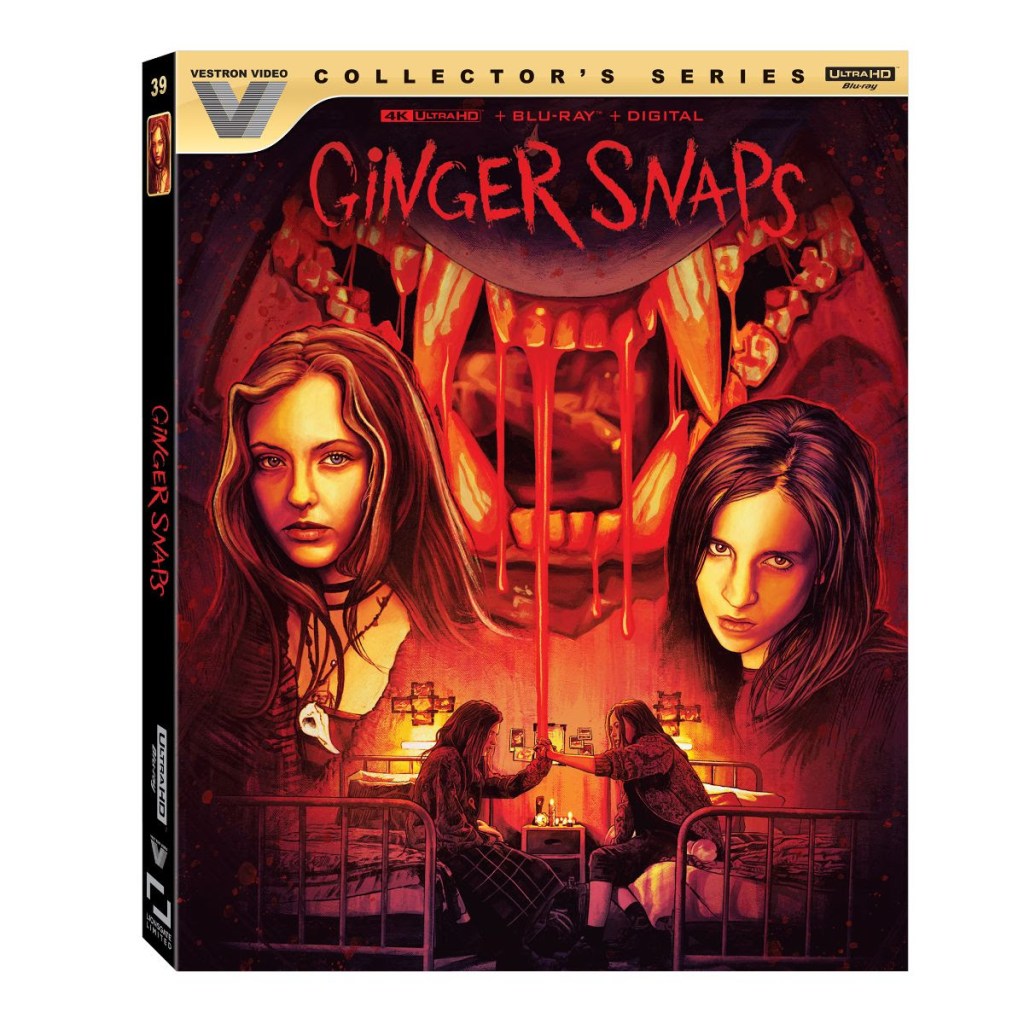
Ginger Snaps director John Fawcett and stars Emily Perkins and Katharine Isabelle are celebrating their cult-classic werewolf movie Ginger Snaps. The trio spoke with ComingSoon’s Tyler Treese about the horror movie’s legacy, its deleted scenes, and more. The film is out today on 4K UHD, Blu-ray, and Digital.
“The cult favorite returns, in hair-raising 4K! Ginger Snaps is the story of death-fixated teenage sisters Ginger and Brigitte, who are attacked one night by a creature drawn to Ginger’s first menstrual period. Bitten by the creature, Ginger soon exhibits sudden aggression and bizarre transformations that convince Brigitte her sister is turning into a werewolf…and that Ginger’s embrace of her liberating new condition may be terminal,” says the official description.
Tyler Treese: It’s such a pleasure to speak with you all. I’m a new convert to the Ginger Snaps fandom. I only just saw it this past week, and I can say the film definitely holds up well. John, I love the opening credit scenes to Ginger Snaps so much. Where did the idea of the death recreations and having the film kinda kick off with that fun, gory imagery come from? Because it really tells you everything you need to know about those characters too.
John Fawcett: Well, you know what, honestly, I think that probably the death-obsessed teenage stuff came from Karen Walton, the writer. She loved a movie called Harold and Maude, and I think that stuff came from there. But the concept of like doing a slideshow, a death slideshow as the opening credit sequence, I was very inspired. I remember being very inspired by the opening credits of Dead Ringers, the David Cronenberg movie, which… there’s a lot of David Cronenberg in Ginger Snaps.
I really just really admired that opening credit sequence, and I thought, “Wow, this would be hilarious if we had a death slideshow along with this very haunting sort of orchestral music.” Yeah, that’s kind of how that happened. I remember we shot all that stuff on a prep day, so we hadn’t even started filming the movie yet. And that was probably our first day where we were all together, like putting on costumes and like putting fake guts on… […] It was just a gas. It was a great first day where we all just were in love with each other, and just had a lot of fun.
Yeah, that has to be a great bonding exercise with just doing all these different poses and all that. And Emily Bridget has to be the responsible sister due to what happens despite being the younger sister in the film. What did you like most about that kind of switch in personality, and just having to really step up to the situation for the character?
Emily Perkins: Yeah, I mean, I think it’s the first time I had played a character where I really got to experience like an arc, a little bit of a change. But it’s not really I think until the end of the movie that she kind of that Bridget kind of comes into her own. She’s very much like under the shadow of her sister, but like you say, she is the one who’s trying to hold everything together. She has that very strong conscience, even though she’s definitely a social critic. She also has a massive superego, which I think is like a sort of weird prudish element about her, like her gothic sensibility. I think that it was just like super fulfilling for me to play a character who experienced that full arc and that full storyline.
Katharine, Ginger undergoes quite the transformation. Not just visually with the really stellar prosthetics and practical effects, but also personality-wise. How was it making sure that you were kind of able to match the story with how Ginger acts over time and really change up your performance? Because we get to see a lot of range from you in this film.
Katharine Isabelle: Well, I think that’s where a great director comes in because they have the overall vision and they have the arc in their head and they can really manipulate where in this story you are feeling certain things and making sure that you stay on track. Not just getting like wild all the time. There’s like one note of wildness.
But yeah, I think the makeup really, really helped me just in like stage one, stage two, stage three transformation. It’s any character I play, as soon as I get the wardrobe on and the makeup and the hair, that’s really when I feel like I have stepped into their shoes. So, to have that hours-long process in each stage of the makeup really kind of just helped me settle into it. Then, John is there too to guide us where we are. It kind of fell into place, and it felt pretty natural at times most of the time.
John Fawcett: I liked it when you were getting wild.
Katharine Isabelle: Yeah. Release the beast!
 (Photo Credit: Lionsgate)
John, you worked with editor Brett Sullivan to make it a really tight film. There are over 20 minutes of deleted scenes, which are really strong and fun to watch in the 4K release. Can you speak to not being precious about those scenes and being willing to let them go for the benefit of the film, just to keep it tightly paced? Because some directors don’t wanna do that. When there’s a good scene, they want to keep it in. So, how was it kind of just letting go and making sure the art kind of came first?
John Fawcett: You know, it’s a process. It really is like, you know, everything is important when you’re writing it, and you’re shooting, and everything is just so important. And even when you get the first cut, the first cuts together, it’s a process of letting go because you start to see where things are slow. You start to see things, all those things that you thought were important in the script, now, actually, you’re kind of seeing it all together, it’s not as important.
But it’s hard. I’m not saying it isn’t hard ’cause when you are authoring something, it is very difficult to edit your own stuff. And so that’s why, you know, Brett was… had a lot of people around me, opinions that I trust, and Brett was a really good editor and, you know, eventually you just kind of go, “This movie’s too f—ing long, and we gotta make it shorter.”
Then you look at the things. Where is the fat, and where are the things that are slowing things down, and where are we being redundant? I’m just happy that all that stuff we shot, you can see in the deleted scenes. It’s cool that you can see where it belongs in the movie. I went through those deleted scenes, actually, just this afternoon, and was just like, “Oh my God, I forgot we did that.”
Emily Perkins: Me too! Me too.
John Fawcett: Yeah, it was really cool.
Emily, you were both quite young when you filmed this. Are there any aspects of the script that have just really impressed you as you’ve had to sit with it for decades, and just how it has aged?
Emily Perkins: I was actually already in my twenties, and I was a university student, and I was a women’s studies major, so in terms of the themes, I think I was pretty aware of those at the time.
But I think what changed for me was like, I was very introverted, and I was very ambivalent about just like, communication. Just like looking back seems strange to me that I was even doing acting because I was the kind of person who had trouble like leaving the house and talking to people [laughs].
So yeah, what’s changed for me now is like, I just think I’m so glad that I had that opportunity, and I got to tell that story because it turned out to have connected with so many people. Now I have fans that come up to me and say, “Yeah, you were the first time I saw someone who was like me on screen.” That’s just such a validating experience. It’s like a hug for me back in time. Like the me that I was back then is like getting a hug from the future. It’s really weird.
Thanks to Ginger Snaps’ John Fawcett, Emily Perkins, and Katharine Isabelle for taking the time to talk about the film and its 4K release.
The post Ginger Snaps Director & Stars Talk Horror Movie’s Legacy to Celebrate 4K Release | Interview appeared first on ComingSoon.net - Movie Trailers, TV & Streaming News, and More.




 Bengali (Bangladesh) ·
  English (United States) ·