

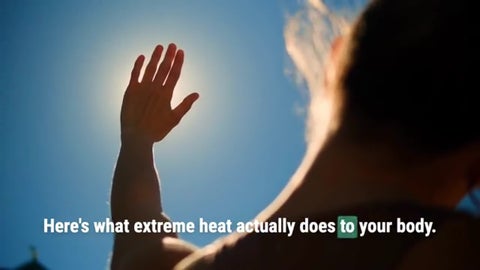
We’re on our third heatwave of the year so far in the UK. This spell – which may become the longest run of hot weather in decades – follows record-breaking temperatures in May and June, which led to school closures and travel chaos.
HuffPost UK previously spoke with young people, psychologists, and environmental campaigners about “climate grief”. This isn’t just about feeling uncomfortable in a heatwave: it’s an existential mourning for the summers and winters we grew up with, which are increasingly less likely to come back.
And environmentalist Dr Ruth Valerio, the author of How to Survive a World in Crisis, recently spoke with us about “heatwave anxiety” too.
What is heatwave anxiety?
Dr Valerio said that, for most of us, our feelings about soaring temperatures have changed in recent years.
“Gone are the days when a heatwave was seen as something positive to be enjoyed: now it is a worrying feature of our warming world that we are having to learn to cope with, both physically and psychologically,” she said.
The weather phenomenon has been linked with sleep deprivation, increased disease risk, and even death. Mental health admissions rise, too.
The environmentalist added that for her, heatwave anxiety is partly “due to the physical impact of not sleeping so well and that extreme heat has on the body, which causes the brain to focus on keeping the body cool”.
“This additional stress leaves us less physiologically capable of functioning in other areas, hence why we can become irritable and lethargic, and why our anxiety levels increase particularly for those already struggling with mental health conditions,” she explained.
But there’s another element to heatwave anxiety, too. This “arises from the recognition that, as a global society, we have not tackled the problem of climate change as we should have done over recent decades and we are now seeing the consequences of that,” said the author.
“We are facing the reality of a climate crisis – something of course that people in other countries have been facing for a lot longer already – and that is a genuinely scary prospect.”
What should I do if I have heatwave anxiety?
Firstly, Dr Valerio said, it can help to pay attention to your body: “If you feel yourself struggling with the heat, for example, feeling more irritable or anxious, it’s good to remember this is partly a natural physiological response to high temperatures and it will pass when the temperature reduces.”
For those seeking to remain calm when it’s hot out, she recommended:
Staying hydrated. ”Dehydration spikes the stress hormone cortisol, which increase anxiety,” the author explained. Drinking enough water can help with your blood flow, too. Try drinking before you feel thirsty in a heatwave.Applying a cold flannel to your face and/or neck. “This is a great tip to soothe anxiety during a heatwave. Exposure to cold water stimulates your vagus nerve, which automatically calms your nervous system by forcing your heart rate to slow down, and... the sudden cold temperature signals to your brain to release endorphins, which are natural mood elevators,” Dr Valerio stated.Putting your feet in cold water. ”Your feet contain dense networks of blood vessels, and cooling these areas forces the blood vessels to constrict, lowering your core temperature,” she added. “As air moves over wet feet, it increases heat loss through evaporation and convection, allowing your body to easily dissipate the trapped heat that may be increasing the anxiety, and signal to your brain that there is no danger.”It’s important to consult a medical professional if you experience anxiety or confusion along with other heat exhaustion symptoms, like dizziness, confusion, and cramps in your arms and/or legs.
Dr Valerio stated, “you should always consult a medical professional [before trying home cooling/calming techniques] especially if you have underlying health conditions”.
As for broader anxiety about heatwaves, it’s “important to acknowledge it”.
“We are right to be feeling those things, and the challenge for all of us is how to take those emotions and channel them into something positive,” she said.
“What we do still matters and it is possible to take constructive action, recognising what is and is not in our power to change and learning how we can stay resilient.
“For example, you could swap out a couple of meals to include more plant- and grain-based options, write a short email to your MP and explain that tackling climate change is a voter issue for you, switch to a renewable energy company, and remember that AI is energy-hungry, so only use it when you really need to.”




 Bengali (Bangladesh) ·
  English (United States) ·