
 2 hours ago
4
2 hours ago
4 
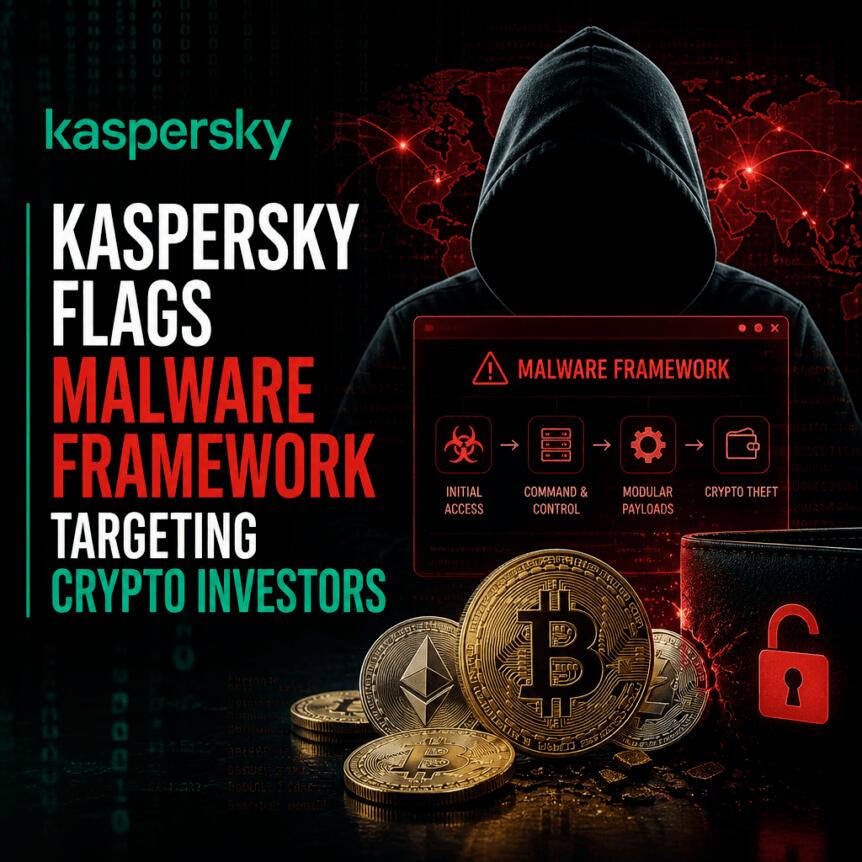
Cybersecurity researchers are flagging a fresh wave of malware tactics aimed at people who hold, build, and advise on crypto-related software. Kaspersky, for instance, says it has discovered a new malware framework—dubbed OkoBot—that targets cryptocurrency investors by combining social engineering with data theft capabilities.
At the same time, SlowMist warns of a separate intrusion campaign that targets Web3 developers through seemingly legitimate recruitment messaging on LinkedIn, pushing victims to run poisoned code hosted on GitHub. Together, the incidents underscore how attackers are increasingly using everyday work routines—interviews, code trials, and app installs—as delivery mechanisms for malware.
Key takeaways
OkoBot is designed to steal crypto-related data by harvesting wallet files, browser information, credentials, and injected browser or extension activity. Kaspersky says it has observed multiple OkoBot-linked attacks since January 2026, and that the framework evolved from an earlier campaign called TookPS. OkoBot’s infrastructure reportedly routes all payload delivery through an SSH tunnel, enabling remote data transport to attacker-controlled systems. SlowMist reports LinkedIn-based “recruiter” scams that deliver malicious GitHub repositories disguised as technical interview tasks for Web3 developers. The recruitment workflow mirrors legitimate developer interviews closely enough to lower suspicion, increasing the chance victims will run the malicious code.OkoBot targets crypto holders through wallet and browser theft
In a report released this week, Kaspersky described OkoBot as a malware framework that kickstarts an infection chain using social engineering and “malicious app” delivery tactics. According to Kaspersky, the initial entry includes tricks such as ClickFix, which aims to persuade users to execute harmful commands, as well as trojanized GitHub applications that can introduce a backdoor to a compromised device.
Once a system is under attacker control, Kaspersky says OkoBot is capable of collecting sensitive information that is directly relevant to crypto ownership. The company reports that the malware can:
Harvest cryptocurrency wallet files. Extract browser data and user credentials. Inject malicious extensions. Capture wallet application windows, potentially enabling theft through on-screen or session-related data.Kaspersky also stated that it identified multiple attacks using this malware family since January 2026. For investors, the practical concern is not only that wallets could be accessed, but also that browser activity and stored authentication data can be used to move faster toward account takeovers or transfer operations.
How the infrastructure works: payload orchestration via SSH
A notable detail in Kaspersky’s analysis is that OkoBot allegedly differs from prior campaigns by how it manages its malicious payloads. Kaspersky said the framework orchestrates all 20 malicious payloads via an SSH tunnel, which supports remote transport of data from compromised computers to systems controlled by attackers.
That matters because it points to an operational model where the attacker retains strong control over follow-on stages after initial compromise. Instead of relying solely on static behavior, a tunneled architecture can help attackers adapt to victims and collect information more reliably, depending on what the malware finds on each host.
Kaspersky also described OkoBot as an evolution of TookPS, a malware campaign first identified in 2025 that distributed a Trojan downloader through fake software websites. By evolving from an earlier delivery approach and adding more coordinated payload handling, the OkoBot framework appears positioned to increase both infection success and post-compromise effectiveness.
LinkedIn recruitment scams push Web3 devs into running poisoned repositories
Separate research from SlowMist focuses on a different target set: Web3 developers. In a report published on Saturday, the firm said attackers are reaching developers through LinkedIn messages that impersonate Web3 recruiters.
SlowMist’s description of the workflow suggests attackers are deliberately choosing a high-trust, familiar entry point. After initial contact, victims are sent what appear to be fake GitHub repositories, framed as a “minimum viable product” that the developer should install and try before an interview.
The technique is effective, SlowMist argues, because it resembles a real technical interview process. The report notes that a legitimate developer workflow often involves pulling code, installing dependencies, and launching a project—steps victims naturally perform while preparing for an interview. In that environment, malicious code can be less obvious, especially if the victim does not expect a security risk from a repository “connected” to a recruiting conversation.
What attackers aim to steal from developer systems
SlowMist said the end goal is to deliver a complete remote access trojan to the victim’s device. Once established, the malware could enable attackers to steal sensitive materials associated with development and operations, including project keys, cloud credentials, or data tied to wallet extensions.
SlowMist also emphasized that the recruitment approach is part of a broader pattern: attackers are increasingly leveraging scenarios such as recruitment, code reviews, and project collaborations to trick developers into running malicious repositories. In other words, this is not only about deception, but also about timing—waiting for the moment a developer is likely to execute code as part of normal work.
Importantly, this LinkedIn-focused warning came after SlowMist reported another campaign targeting macOS users. That earlier effort, as SlowMist described it, aimed to steal credentials and hijack Telegram sessions in order to coerce victims into submitting wallet recovery phrases through fake websites. While the TTPs differ between the campaigns, both point to the same underlying threat: attackers are methodically chaining social engineering and credential theft to ultimately compromise crypto access.
Going forward, both reports suggest readers should watch for more “legitimate-looking” pathways into compromise—especially where code execution is requested via recruiters, interview workflows, or third-party repositories. For investors and developers alike, the immediate question is not only whether malware is present, but whether attackers can leverage everyday trust and authenticated sessions to reach wallet-relevant secrets quickly.
This article was originally published as Kaspersky Flags Malware Framework Targeting Crypto Investors on Crypto Breaking News – your trusted source for crypto news, Bitcoin news, and blockchain updates.




 Bengali (Bangladesh) ·
  English (United States) ·