
 3 hours ago
1
3 hours ago
1 
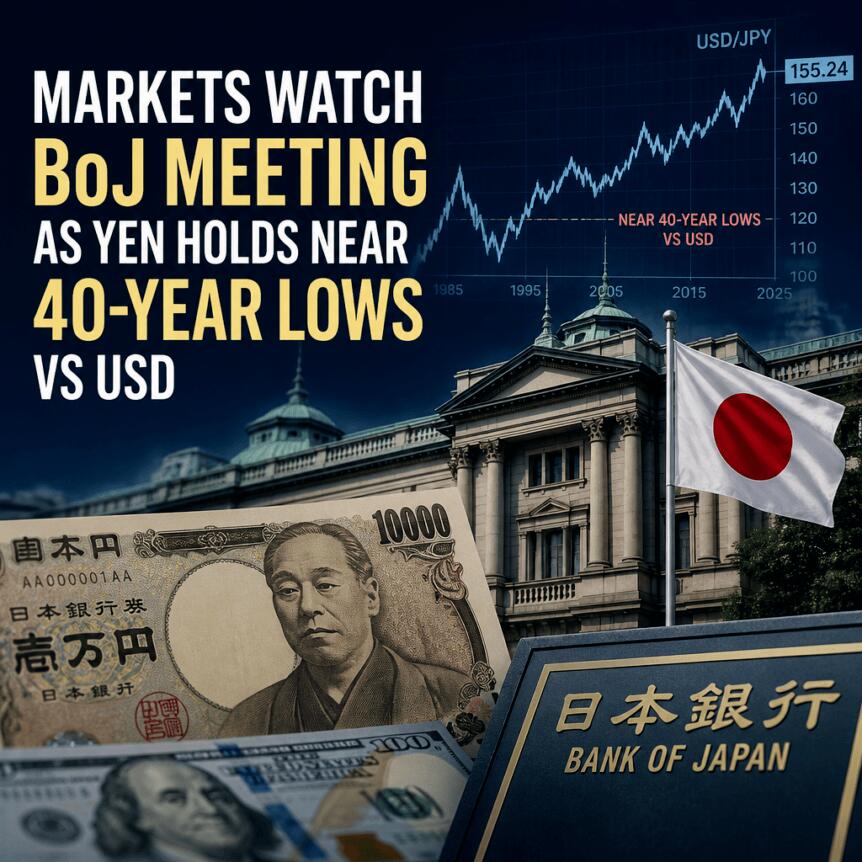
Japan’s next monetary policy decision is coming into sharper focus as the yen keeps sliding toward fresh 40-year lows against the US dollar. With the Bank of Japan (BoJ) scheduled to meet on July 31, markets are weighing whether policymakers will pause at current levels—or signal further tightening as the currency weakens.
The immediate question for global markets, and particularly for crypto traders, is how much pressure a yen slide can add through “carry trade” dynamics. When Japanese rates stay low and the yen depreciates, borrowing in yen to fund riskier assets can expand. But if conditions shift—especially if the yen moves abruptly—those positions can unwind quickly, tightening liquidity and often hitting highly leveraged markets.
Key takeaways
USD/JPY is nearing new 40-year highs, edging toward the 164 area after last week’s record set, according to TradingView. The BoJ meets on July 31 with its policy rate currently at 1.0%, the highest since September 1995. Market pricing points to a hold decision, with prediction markets indicating very high odds of no change. Yen carry-trade unwinds remain a key risk for crypto liquidity, after the 2024 unwind episode was triggered by yen-related interventions.Yen weakness puts the BoJ under a global spotlight
On Tuesday, data from TradingView showed USD/JPY approaching 164, just short of the new 40-year highs recorded last week. That level matters not only because it reflects yen depreciation, but because Japan’s currency policy affects far more than domestic pricing.
The yen is widely used as a funding currency. With relatively light capital controls and deep liquidity outside the dollar, a weakening yen can reinforce global carry strategies—positioning that depends on Japanese rates staying low and exchange rates remaining stable enough to avoid forced closures.
Japan’s backdrop has also supported that role for decades: earlier current account and trade surpluses helped underpin the currency’s liquidity profile while low interest rates kept yen funding attractive. However, since inflation picked up in 2022, the balance has been shifting toward the possibility of carry-trade stress—particularly if yen depreciation forces investors to exit leveraged trades faster than they expected.
The BoJ’s July 31 decision comes as the policy rate stands at 1.0%, its highest since September 1995. While most expectations currently point to no change, the forward guidance from earlier in the year has kept attention on the pace and timing of potential further hikes.
Markets expect a hold—BoJ’s guidance still leans toward tightening
On expectations for the upcoming meeting, markets appear aligned around the idea of a pause. The reporting around the decision notes that market-implied probabilities show a rate hold at roughly 98%, following the BoJ’s most recent increase in June.
Prediction service Polymarket similarly priced the odds of no change at 99% as of Tuesday, signaling that traders largely expect policymakers to keep the benchmark rate unchanged at the July meeting.
Still, the June meeting summary referenced conditions that could justify additional tightening later. In its published summary, the BoJ pointed to underlying inflation approaching 2%, accommodative financial conditions, and the appropriateness of continuing to raise the policy rate and adjust the degree of monetary accommodation in response to developments in activity, prices, and financial conditions.
The same BoJ materials also flagged how exchange rate moves can feed into CPI dynamics. According to the BoJ’s Outlook for Economic And Prices issued after its April meeting, firms’ pricing and wage behavior may make exchange rate developments more likely to affect prices than in past regimes—ultimately influencing underlying CPI inflation through changes in inflation expectations. The document explicitly notes that attention should be paid to this mechanism.
Since then, yen weakness has persisted, even after the June rate hike. As earlier coverage from Cointelegraph noted, the yen has remained above the key 160 level against the dollar despite a post-hike dip, with the broader trend still pointing toward yen depreciation.
Crypto traders watch carry trade risk as yen moves near highs
For crypto markets, the yen story is not just macro trivia—it is a liquidity channel. The yen carry trade can act as a source of risk capital for assets that trade with high leverage, including cryptocurrencies. But that linkage cuts both ways: if the yen strengthens or begins to move sharply, carry positions can unwind, often transmitting stress into trading venues quickly.
Cointelegraph previously reported that interventions in August 2024 triggered a snap “unwinding” of the carry trade, which was accompanied by a rapid negative impact on Bitcoin and altcoins. That episode matters because it illustrates how quickly a trade can reverse when currency moves overwhelm the assumptions that initially made it profitable.
With USD/JPY building on new 40-year highs, concerns about a repeat have resurfaced. Analyst Ricky Ho highlighted in an X post on Monday that the carry trade works only if two conditions remain intact: Japanese interest rates stay exceptionally low and the yen remains broadly stable or continues depreciating. Ho also argued that unwinds are rarely gradual, citing leverage levels that can force faster exits than markets may expect.
Ho went further, suggesting that investors may be focusing too narrowly on the specific months of future BoJ hikes. In his view, the more important issue is that the policy direction has already fundamentally changed—meaning that the risk is tied to the trajectory of policy rather than the calendar.
That framing is particularly relevant given the uncertainty around how much of the yen’s weakness the BoJ is willing to tolerate, and whether further tightening might be used to influence currency stabilization indirectly. If the BoJ’s stance shifts from slow, incremental normalization toward a more hawkish path, it could affect expectations around the yen—either helping prevent disorderly moves or raising the chance of abrupt repricing if markets believe the currency will recover too quickly.
What to monitor before and after July 31
With the BoJ meeting on July 31 and expectations currently centered on a hold, traders and investors will likely focus less on the decision itself and more on the details that follow: any changes in language about the yen’s impact on CPI, how the BoJ balances financial conditions with inflation and growth, and whether guidance implies additional hikes sooner than markets are currently pricing.
Even if the rate is left unchanged, the market’s sensitivity to the yen’s trajectory remains high. The question for the next phase of both macro and crypto liquidity is whether USD/JPY stabilizes—or whether yen moves accelerate in a way that forces leveraged positioning to adjust rapidly.
This article was originally published as Markets Watch BoJ Meeting as Yen Holds Near 40-Year Lows vs USD on Crypto Breaking News – your trusted source for crypto news, Bitcoin news, and blockchain updates.





 Bengali (Bangladesh) ·
  English (United States) ·