

We’ve all been there: you’re doing a food shop on your phone or pinging an email to a colleague, and your child asks you something.
You’re so engrossed that you don’t really hear them. Then you look up and see your kid just standing there, looking at you and your phone. You have no idea what they’ve said.
If you haven’t phubbed – that’s a portmanteau of “phone” and “snubbed” – your kids, you’re probably in the minority.
One survey found 62% of people reported looking at their phone while having a face-to-face conversation with someone else. Partners, friends and siblings were most likely to be phubbed, followed by children.
Psychotherapist Anna Mathur tells HuffPost UK that the act of phubbing is “extremely common” – we’re living in an age where our phones are designed to demand our attention, she says, “and most parents are also trying to stay on top of work, admin and the relentless scroll of modern life”.
“Phubbing is rarely a sign that a parent doesn’t care. It’s a sign that we are all navigating a technology landscape that our brains and bodies weren’t designed for,” adds the author of How To Stop Snapping At The People You Love (As Well As the Ones You Don’t).
“If we’re really honest with ourselves, for a lot of us it’s a genuine battle, a conflict between our values and our behaviour. We value presence... we want to be there for our kids (and for each other), and yet we reach for the phone anyway. That dissonance is real.”
The impact of phubbing on children
While phubbing the kids once or twice probably isn’t going to have much of an impact overall, making a habit of deliberating ignoring them in favour of your phone can certainly be harmful over time.
One study into parental phubbing found it had a “significant” effect on social withdrawal in young children. Some researchers suggest it could also contribute to kids feeling unloved, which can impact wellbeing.
“Children learn about their own worth through the attention of their caregivers. When a phone consistently wins the competition for our gaze, children can begin to absorb the message that they are less important, less interesting, less worthy of attention than whatever is on that screen,” says Mathur.
“Over time this can impact self-esteem, emotional regulation, and the way they relate to others.”
Children who grow up in homes where screens take priority over people are more likely to repeat those patterns themselves, adds the therapist.
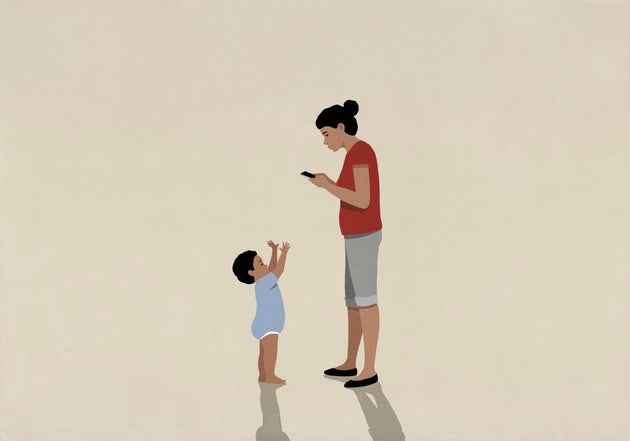 Baby boy reaching for distracted mother using smart phone
How to kick your phubbing habit
The good news is that small, consistent, conscious changes can make a difference.
One of the biggest things that has helped Mathur is using an app blocker (called App Block) so she physically can’t access apps before and after her kids are home from school. (She has a window to check her phone once they’re in bed.)
“It sounds strict but it has been genuinely life-changing – I’d pay the subscription fee over and over! It takes the decision out of my hands,” she says.
“Our impulse control around phones is often low (even more so I find as an often hormonal, often overwhelmed, neurodivergent woman!), and that’s not a personal failing, it’s by design.”
Putting up physical barriers then can really help.







 Bengali (Bangladesh) ·
  English (United States) ·