

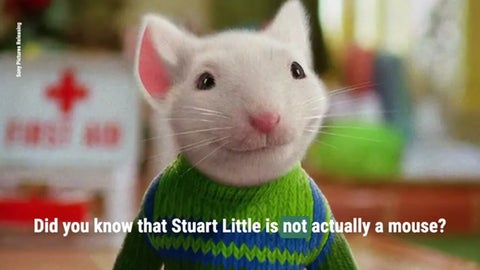
First came the news that Stuart Little is not a mouse.
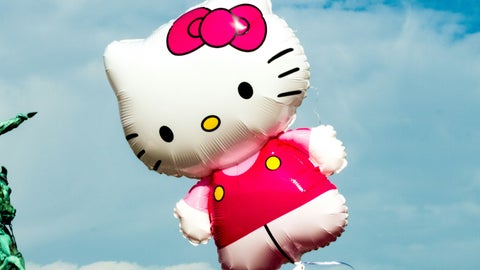
Then, I found out that Hello Kitty is not a cat, either.
And yesterday, my understanding of basic reality took another crushing blow: it turns out bubble wrap, the air-filled packaging material you’ve probably enjoyed popping between your finger and thumb, was originally meant to be used as decor.
More specifically, bubble wrap was first designed as wallpaper (yep, really).
How on Earth was bubble wrap used as wallpaper?
If you’re anything like me, disturbing thoughts of poppable walls have already entered your mind (especially tough, I imagine, for those with trypophobia).
But thankfully, inventors Alfred Fielding and his chemist business partner, Marc Chavannes, were extraordinarily open to repurposing Bubble Wrap, which they came up with in 1957.
They originally made the material by placing two plastic shower curtains together in a heat-sealing machine in an attempt to make a novel textured wallpaper for the trendy Beat generation.
However, they weren’t set on that use. Their patents included over 400 uses for the material, including greenhouse insulation, which didn’t exactly take off.
However, when tech company IBM released their fragile, expensive, technically impressive 1401 computer, distributors needed something soft, insulating, and protective with which to ship it.
That’s when bubble wrap’s function as a packing material really became cemented, reports Forbes.
Bubble Wrap is only part of the Sealed Air company
Fielding and Chavannes created the Sealed Air company in 1960, of which Bubble Wrap was the star product.
But, per Packaging Gateway, the company now “generates most of its revenue from two broad areas: food packaging, which helps protect meat, dairy and other fresh products, and protective packaging, which cushions goods as they move through warehouses and delivery networks”.
They do not, however, seem to have developed a home decor department.




 Bengali (Bangladesh) ·
  English (United States) ·