
 3 weeks ago
10
3 weeks ago
10 
TLDR
Samsung posted record Q1 2026 revenue of KRW 133.9 trillion and operating profit of KRW 57.2 trillion SK Hynix reported record quarterly profit with operating profit of KRW 37.6 trillion and net profit of KRW 40.3 trillion SK Hynix leads in high-bandwidth memory and is most directly tied to AI chip demand Samsung offers more diversification across foundry, mobile, and consumer electronics Analysts rate both stocks as Strong Buy, with SK Hynix holding a slight edge in consensusSouth Korea’s two biggest memory chip companies both reported record results in Q1 2026. Samsung and SK Hynix are each riding the AI wave, but in different ways.
Samsung posted revenue of KRW 133.9 trillion in Q1 2026. Operating profit came in at KRW 57.2 trillion. Both figures were records for the company.
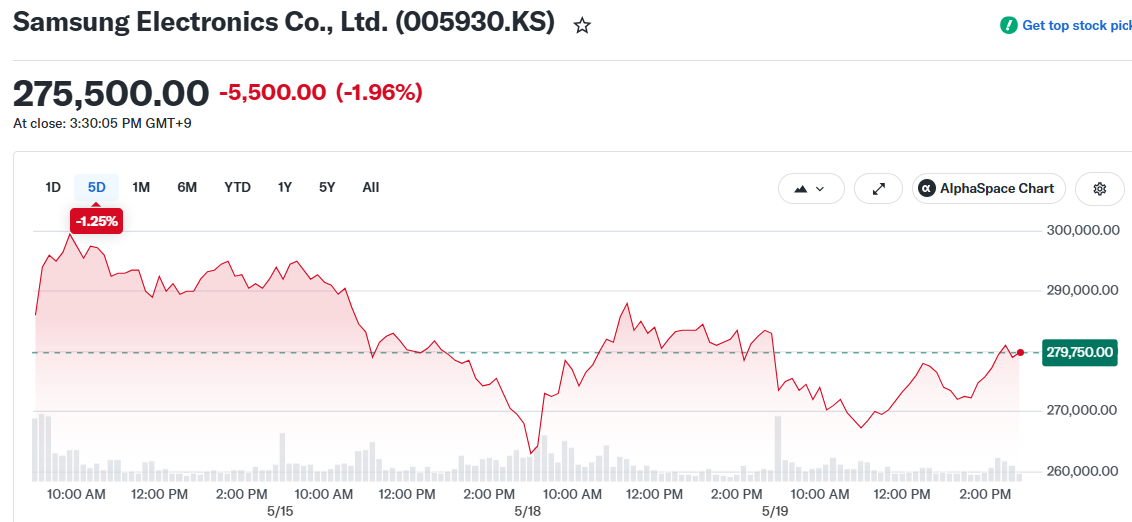 Samsung Electronics Co., Ltd. (005930.KS)
Its chip division drove the majority of those earnings. Samsung also announced plans to invest more than KRW 110 trillion in 2026 on research and facilities.
Samsung is not just a memory company. It also operates in foundry services, mobile devices, consumer electronics, and displays.
That diversity gives it more protection if one corner of the semiconductor market slows down. But it also means more moving parts to manage.
Reuters has reported on labor tensions and potential strike risks at Samsung’s chip operations. The company is also still working to close a gap with SK Hynix in high-bandwidth memory.
SK Hynix: A More Direct AI Memory Play
SK Hynix posted revenue of KRW 52.5 trillion in Q1 2026. Operating profit was KRW 37.6 trillion. Net profit came in at KRW 40.3 trillion. All three were records.
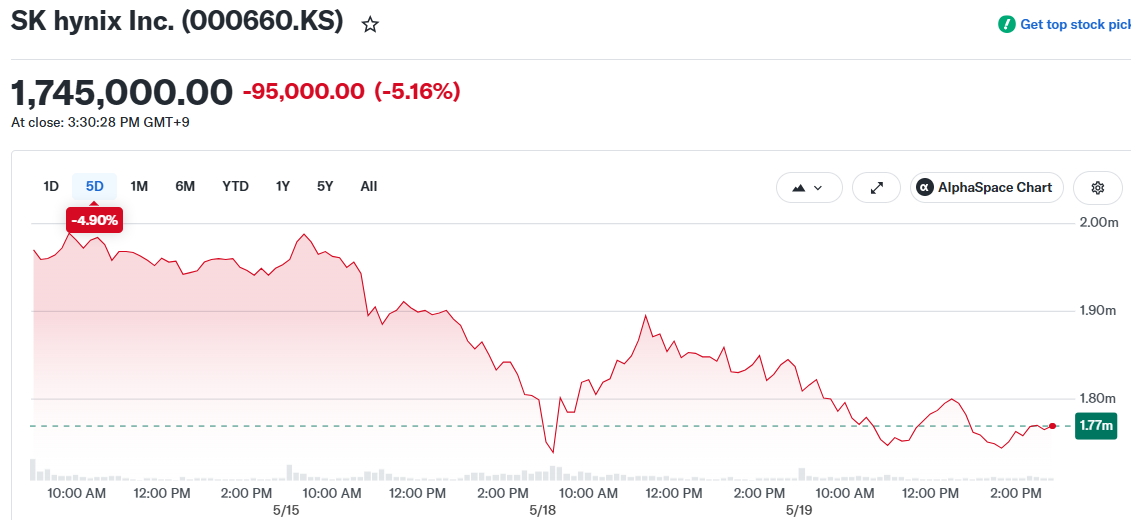 SK hynix Inc. (000660.KS)
The company said it expects AI chip demand to exceed its manufacturing capacity in the near term. That points to tight supply and strong pricing power for high-bandwidth memory.
SK Hynix is the name most closely linked to the current HBM boom. Its stock rallied after major US tech companies signaled continued AI infrastructure spending.
The company is also exploring a possible listing on a US stock exchange. That would give it access to a wider investor base and more capital market flexibility.
The trade-off is concentration. SK Hynix does not carry Samsung’s level of business diversity. Its fortunes are more tightly tied to memory pricing and AI demand holding up.
What Analysts Are Saying
Both stocks carry a Strong Buy consensus. Investing.com data shows Samsung rated by 37 analysts, with 36 buy ratings. The average 12-month price target is KRW 274,603.
SK Hynix holds a Strong Buy from 38 analysts, with 36 buys and 2 holds. Its average price target is around KRW 1,771,866.
SK Hynix edges ahead slightly on analyst consensus. The gap is narrow, but it reflects the market’s preference for pure-play AI memory exposure right now.
Samsung suits investors who want scale and a broader semiconductor platform. SK Hynix suits those who want more direct exposure to HBM demand and the AI infrastructure buildout.
SK Hynix posted the stronger Q1 2026 net profit relative to its size, and its capacity constraints point to continued pricing power in the near term.
The post Samsung vs SK Hynix: Which AI Memory Stock Is the Better Bet Right Now? appeared first on CoinCentral.



 Bengali (Bangladesh) ·
  English (United States) ·