
 4 hours ago
2
4 hours ago
2 
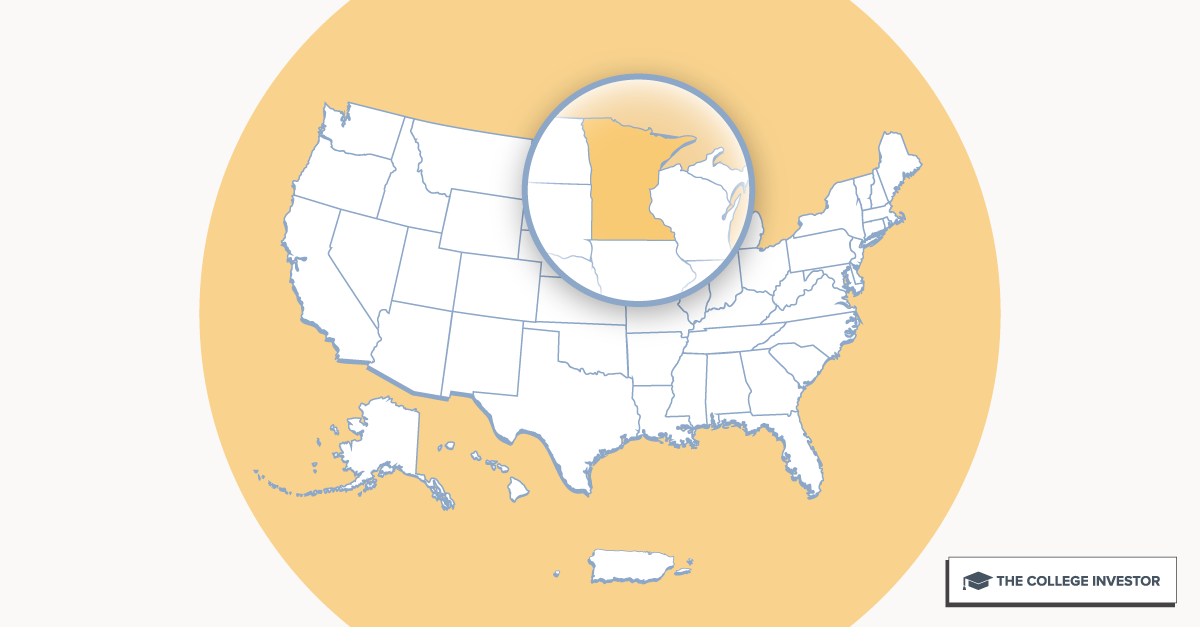
State-chartered nonprofit student loan authorities are rolling out graduate school loans to catch borrowers who lose access to federal Grad PLUS loans on July 1.
Why it matters: The One Big Beautiful Bill Act closes Grad PLUS to new borrowers and imposes hard caps on what graduate and professional students can borrow from the federal government.
For students in expensive medical, dental, law, and other advanced programs, that leaves a funding gap that only private loans or institutional aid can fill — and a handful of states are now trying to fill it themselves.
Driving the news: Connecticut and Minnesota have each launched their own state-backed graduate loan programs aimed squarely at the Grad PLUS gap. Other states, like Rhode Island, have offered a graduate loan for years.
In Connecticut, the Connecticut Higher Education Supplemental Loan Authority (CHESLA) introduced the MyCHESLA Grad Loan. It offers fixed rates starting at 5.50%, repayment terms of 5, 10, or 15 years, and in-school payment choices that include interest-only, full deferment, or immediate principal-and-interest payments.
Minnesota followed with the SELF Grad Loan through its Office of Higher Education. The program sets fixed rates based on whether a borrower has a co-signer and which term they choose (10, 15, or 20 years) rather than on a credit score. As of this week, 35 Minnesota colleges and universities had signed on.
Rhode Island (RISLA) has offered a graduate loan for several years, offering borrowing options to those pursuing an MBA, medical school, law school, and more.
The federal backdrop: Starting July 1, 2026, new graduate borrowers are capped at $20,500 a year and $100,000 total.
Professional students (future doctors, dentists, and lawyers) can borrow $50,000 a year and $200,000 total.
The bigger picture: Connecticut and Minnesota are not the only options. Several state nonprofit lenders already make graduate loans available, including the Rhode Island Student Loan Authority (RISLA), which lends nationwide to master's and doctoral students, and Texas-based Brazos, which offers graduate borrowing for Texas residents.
These lenders typically pitch lower rates and fewer fees than for-profit private lenders, and some carry borrower-protection features federal loans are losing. State-based non-profit lenders are unique in that they can typically access funds at lower cost due to their status as a state-affiliated organization. They are then able to pass those lower costs onto borrowers.
How this connects: The College Investor has tracked the Grad PLUS phase-out closely, including confirmation that graduate borrowing now sits inside the $257,500 lifetime cap and warnings that the new limits could push some higher-cost programs and colleges to close.
With federal aid shrinking, state nonprofit authorities are emerging as one of the few lower-cost alternatives — though availability still depends heavily on where a borrower lives or studies.
It's also always important to compare traditional graduate private loans to state non-profits. Your individual situation may still earn you a better rate privately.
What's next: Expect more states with non-profit lenders to create similar programs in the coming year. Borrowers should compare any state nonprofit option against private lenders on rate, fees, term length, and in-school repayment flexibility before signing.
Don't Miss These Other Stories:
Editor: Colin Graves
The post State Nonprofit Lenders Step In As Grad PLUS Loans Disappear July 1 appeared first on The College Investor.





 Bengali (Bangladesh) ·
  English (United States) ·