

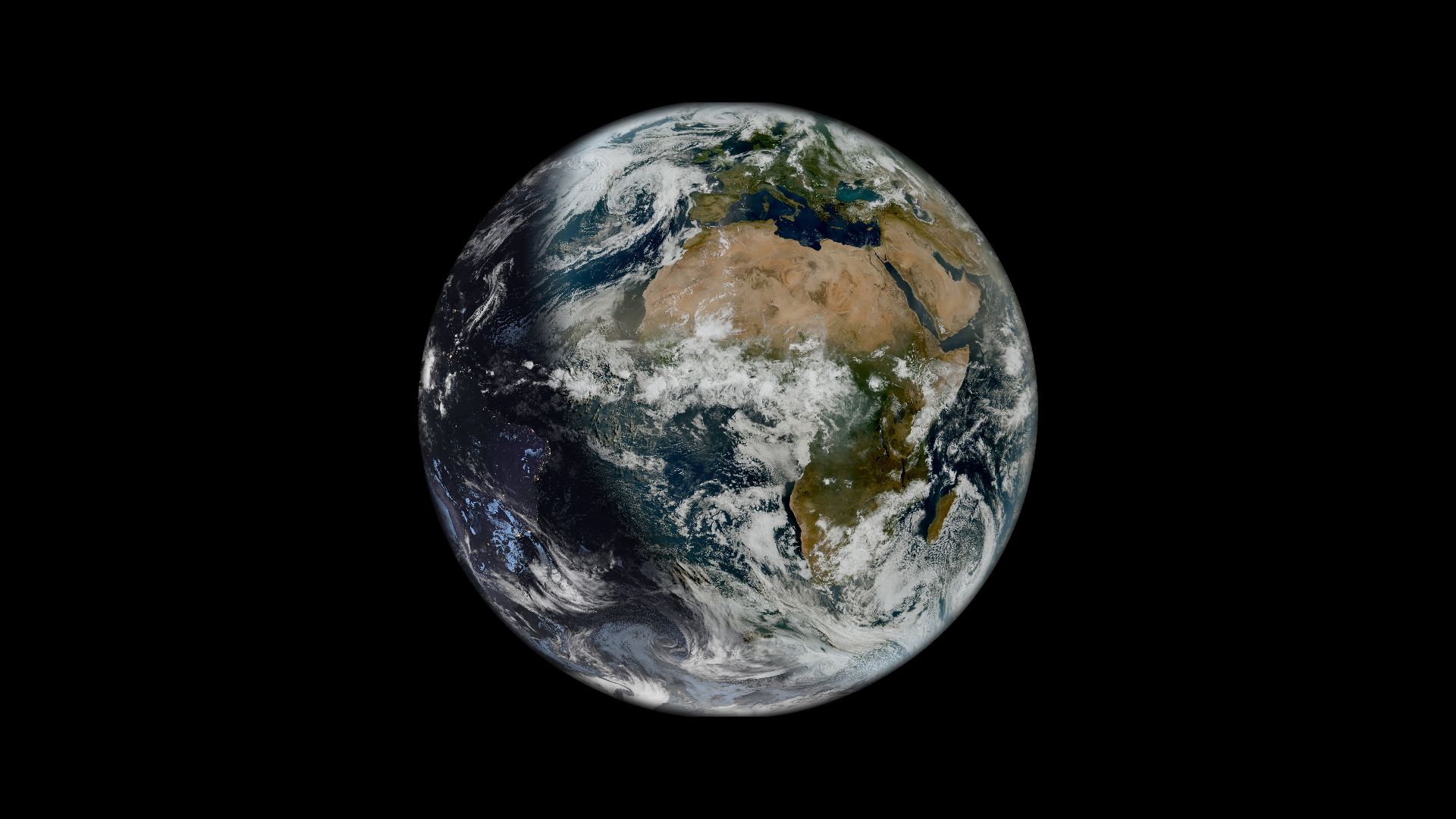
Twice each year, we celebrate what we call a solstice when Earth is at its maximum tilt toward or away from the sun. And during this June's summer solstice, a European weather satellite managed to capture a striking image of the celestial moment from space.
What is it?
This image of the solstice was captured on June 21 by the European Space Agency's (ESA) Meteosat Third Generation (MTG) mission. This is a fleet of Earth-monitoring satellites that capture images of our home planet to support weather monitoring over Europe, Africa and regions of the Atlantic and Indian Oceans. The first Meteosat satellite launched in 1977 as ESA's first Earth-observing mission, and to date, there have been 11 satellites launched as part of this series.
In this image, the first of the third generation of Meteosat satellites, MTG-I1, captured an image of Earth just six minutes after we passed the moment of summer solstice, according to ESA. This image shows clearly Earth's "terminator line," or the fuzzy "line" that divides nighttime and daytime on a planet.
Why is it incredible?
On the day of a solstice when Earth is at its maximum tilt, there is almost exactly the same amount of daytime as there is nighttime. In the northern hemisphere, the June solstice marks the longest day of the year, or the day with the most sunlight. And, in the southern hemisphere, the June solstice marks the shortest day of the year.
In June, those in the northern hemisphere celebrate their extra hours of sunlight before the days start getting shorter again. Historically, solstices have been celebrated around the world, folded into cultural traditions and practices. As humans invented agriculture, and our food systems rely on things like available sunlight, it makes sense that throughout time, the changing duration of sunlight would be tightly intertwined with all aspects of our day-to-day lives.




 Bengali (Bangladesh) ·
  English (United States) ·