
 4 hours ago
2
4 hours ago
2 
There is a particular feeling that accompanies loving something as you watch it disappear. It is not quite despair and not quite hope. It lives somewhere in between, in the place where grief and stubbornness meet. Literature feels particularly suited to capturing that emotional contradiction because novels can hold multiple truths at once. They can contain dread and tenderness, beauty and decay, intimacy and catastrophe without reducing them to neat resolutions. Yet there’s not enough literature about this specific kind of grief, especially stories interested less in apocalypse itself and more in the emotional texture of living through slow disappearance. So much of climate storytelling asks what will happen. I am often more interested in what it feels like to keep loving a place, a person, or a future while knowing it is changing beyond recognition.
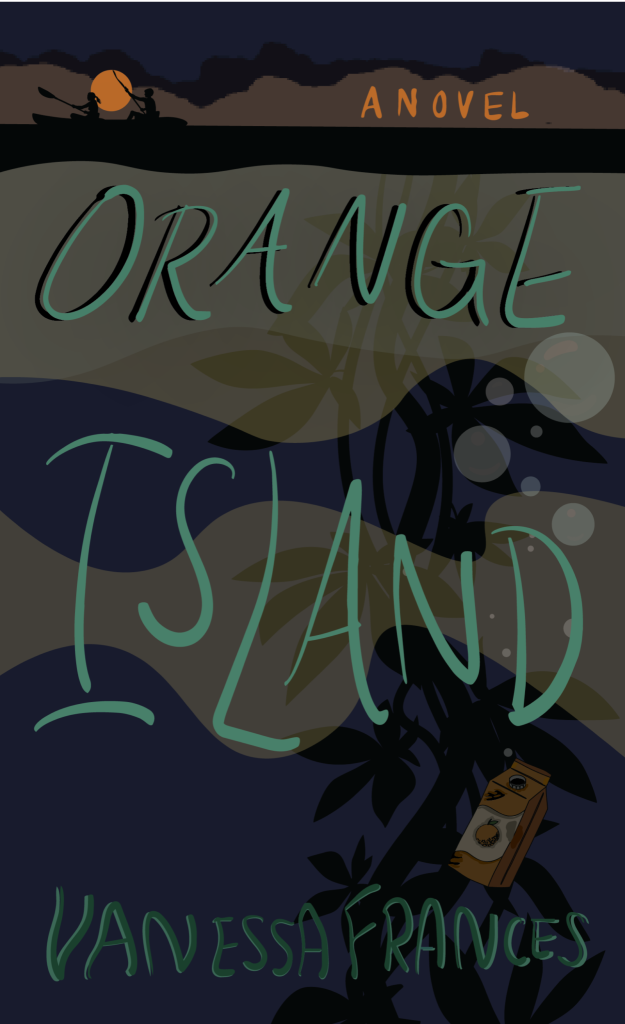
My debut novel, Orange Island, grew out of this ache. It is set in 2060 in a Florida battered by climate collapse, where fruit is a luxury, and the heat is something people die from (not too far from what we know today). At its center is Savannah, a young woman piecing together the story of her dead sister Dove, a researcher who spent her life trying to find a way to make humans more resilient to a hotter world. Writing it, I kept returning to the question the book kept asking me back: How do we stay hopeful when things feel genuinely, irreversibly broken?
The books on this list were companions through the process of writing Orange Island. Some of them I carried around for years before I understood why. They are stories about survival and longing and the stubbornness of love, set against landscapes that feel like characters of their own. They are about land and water and heat, about the people who are shaped by places and the places that are shaped, and often destroyed, by people. They are not all climate fiction, and they are not all tragedies, but they all understand what it means to grieve something that is still technically alive. I hope they find you wherever you are in that grief, and leave you wanting to go outside.
Their Eyes Were Watching God by Zora Neale Hurston
Janie Crawford spends her life moving through a series of marriages and communities in search of autonomy, love, and a selfhood larger than what the world expects from her. Set across central Florida and the Everglades, the novel follows her final marriage to Tea Cake and the life they build together on the muck before a catastrophic hurricane reshapes everything. Janie’s story is about much more than romance, but it is also, quietly, a book about Florida: the muck of the Everglades, the labor of the land, the violence of a storm that will not be bargained with. Hurston writes the natural world the way most writers write people, with interiority and consequence. The hurricane in the final act is one of the most devastating and accurate depictions of what weather can do to a community built without protection. It is a book about joy that never pretends the world is safe.
Where the Crawdads Sing by Delia Owens
After being abandoned by her family as a child, Kya Clark grows up alone in the marshes of coastal North Carolina, surviving by learning the rhythms of the natural world more intimately than the social one. When a local man is later found dead, the town turns its suspicion toward the “Marsh Girl,” forcing Kya to confront the ways isolation can both protect and endanger a person. Whatever you think of this book’s cultural moment, Kya Clark’s relationship to the North Carolina marsh is worth sitting with. She is raised by a place after her family abandons her, and she learns its language more fluently than she ever learns the language of people. The wetlands in this novel are not backdrop. They are shelter, teacher, and, in the end, something like justice. Where the Crawdads Sing takes seriously the idea that wild places can hold us when humans will not.
Salvage the Bones by Jesmyn Ward
Set in the 12 days before Hurricane Katrina, this novel follows a poor Black family in rural Mississippi who have no real option but to wait. Ward writes poverty and love with the same precision, and the storm, when it arrives, does not feel like a plot device. It feels like what it is: an event that punishes people who were already being punished. This is essential reading on how climate and catastrophe are not felt equally, and how survival is not just physical but something you carry with you after.
The Buried Giant by Kazuo Ishiguro
This one might seem like the outlier, but it earns its place. A couple in post-Arthurian Britain travels through a landscape wrapped in collective forgetting, trying to find their son and make sense of what they have lost. Ishiguro is writing about memory and erasure, but he is also writing about what happens to the land when the people on it stop paying attention. There is a quiet devastation in this book that did not leave me for a long time.
Flight Behavior by Barbara Kingsolver
In a rural Appalachian community, Dellarobia Turnbow stumbles across what looks like a mountainside on fire, only to discover millions of displaced monarch butterflies have unexpectedly migrated there due to climate disruption. As scientists descend on the town to study the phenomenon, Dellarobia begins questioning the limits of her marriage, her community, and the future everyone around her has assumed is fixed. Kingsolver is brilliant at writing people who are not environmentalists but who find themselves in the middle of something they cannot explain and cannot ignore. The protagonist, Dellarobia, is curious and funny and hemmed in by her life. Watching her encounter this strange and terrible beauty is one of the more moving experiences I have had reading fiction about climate.
The New Wilderness by Diane Cook
In a near future devastated by environmental collapse, Bea and her young daughter Agnes leave the last overcrowded city to join an experimental community allowed to live inside one of the world’s remaining protected wilderness areas. As the group struggles to survive under constant observation and increasingly brutal conditions, Bea is forced to confront what survival means. The New Wilderness is a speculative novel at its core, an examination of motherhood, and a quiet horror story, often at the same time. Cook does not offer comfort. The wilderness in this book is not redemptive. It is indifferent, and the people in it are asked to become something they are not sure they can become.
The Beautiful Things That Heaven Bears by Dinaw Mengestu
An Ethiopian immigrant runs a small grocery store in a gentrifying Washington, D.C. neighborhood and tries to make sense of what he has left and what he has found. This is not an environmental novel in the traditional sense, but it belongs here because it understands displacement from the inside. Mengestu writes about longing for a place you cannot return to with a precision that hit me somewhere I was not expecting. Grief for land and grief for home are the same grief, and this book knows that.
Migrations by Charlotte McConaghy
An Archivist for the End of the World
An excerpt from LANDSCAPES by Christine Lai, recommended by Ayşegül Savaş
A woman follows what may be the last Arctic terns on earth on their migration to Antarctica, carrying her own grief and history alongside theirs. McConaghy writes about a world where animals have almost entirely vanished with a restraint that makes it more devastating, not less. It is a book about obsession and loss and what we do when the thing we love is already mostly gone, told by a narrator who is herself a kind of endangered creature. The natural world here is an elegy, and the journey feels both urgent and too late.
Bewilderment by Richard Powers
A grieving astrobiologist raises his neurodivergent son alone while the son becomes consumed by the fate of disappearing species. Powers is one of the few writers who can make ecological grief feel personal without making it sentimental. The father-son relationship at the center of this book does what the best speculative fiction does: It makes the abstract catastrophe of extinction feel like something happening to people you know and cannot protect. It pairs naturally with Flight Behavior and fills out the list’s thread of parenthood and inheritance alongside Ward and Cook.
The post The Places We Love Are Disappearing. These Authors Are Grappling With It appeared first on Electric Literature.




 Bengali (Bangladesh) ·
  English (United States) ·