

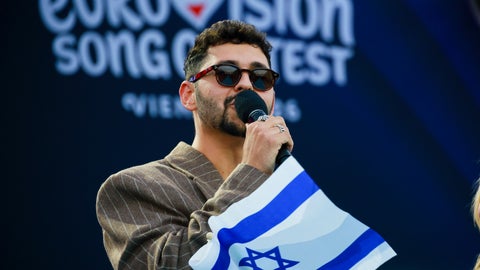
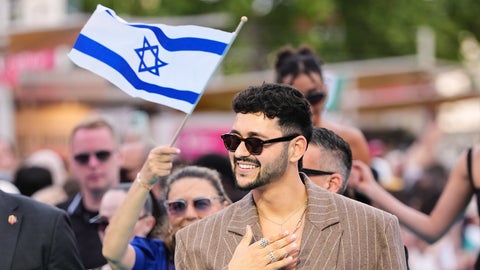
 Israeli singer Noam Betta at the opening ceremony of the 2026 Eurovision Song Contest
The last two contests have undoubtedly been among the most contentious in Eurovision’s 70-year history – and this year’s event has already proved to be every bit as controversial.
Israel’s continued presence at Eurovision despite the ongoing conflict in Gaza has faced backlash from many critics for some time, with the controversy prompting many of the competition’s key members to pull out completely ahead of this year’s event.
For those who need a quick reminder of what the whole debacle is about, here’s a quick guide to what’s happened so far…
Hang on – first of all, why is Israel even a part of the Eurovision Song Contest in the first place when it’s not even in Europe?
Well, despite what the name might imply, a country doesn’t actually need to be in Europe to compete in the Eurovision Song Contest.
All a country does need is to be a member of the European Broadcasting Union (EBU), which Israel’s national broadcasters – first the Israel Broadcasting Authority, and later KAN – have been since the 1970s.
Israel has been competing in Eurovision since 1973, and in that time, it has won on four different occasions.
The most recent victory for Israel was as recently as 2018, when Netta triumphed with her song Toy, resulting in 2019′s contest taking place in Tel Aviv.
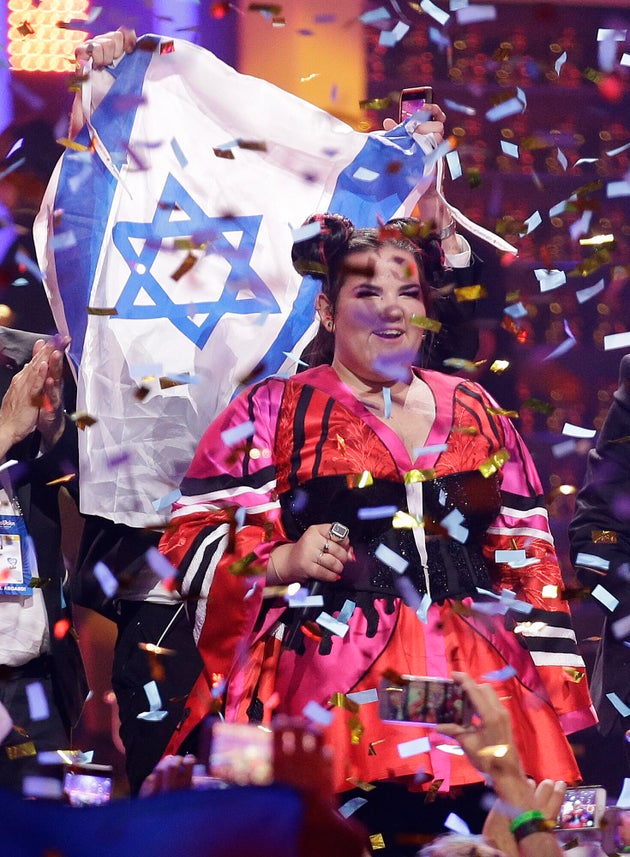 Netta is the most recent act to win Eurovision for Israel
Previous Israeli champions have included back-to-back winners Alphabeta and Milk And Honey in 1978 and 1979 respectively, while Dana International made history as the contest’s first transgender victor in 1998.
Interestingly, there have been recent suggestions that Israel could leave Eurovision in the future to compete in the contest’s newly-launched Asian counterpart, though these rumours remain unconfirmed for the time being.
Like Israel, Australia is also a Eurovision contender despite not being in Europe, initially joining the competition as a one-off for its 60th anniversary in 2015, but later returning every year since.
There’ve also been rumblings about Canada joining in the future, though this remains a rumour for the time being.
How far back does the backlash about Israel at Eurovision stretch?
Further than you might think, but the conversation was amplified in 2019, when the competition took place in Israel for the first time in over a decade, prompting calls for a boycott.
This conversation has grown even louder in the last three years as the conflict in Gaza has intensified, leading many critics to call for Israel’s expulsion.
A precedent for this does exist, as Russia was banned from competing at Eurovision in 2022 following the invasion of Ukraine.
What has happened with Israel at the last two Eurovision Song Contests?
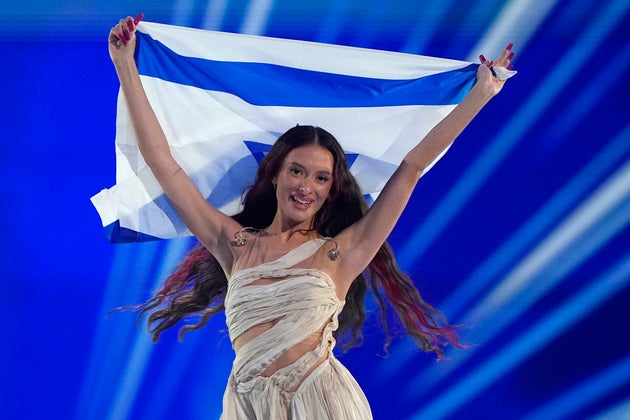 Eden Golan represented Israel at Eurovision in 2024, finishing in fifth place overall
In the run-up to Eurovision 2024, an increasing number of fans urged organisers to remove Israel as a competitor, as a result of the ongoing conflict in Gaza.
Ultimately, Eurovision bosses chose to keep Israel as part of the contest, which led to calls for an overall boycott of the broadcast, which were backed by the Palestine-led BDS movement.
In the UK, Eurovision dropped around a quarter of its viewership in 2024 compared to the previous year’s broadcast, though it’s worth pointing out that in 2023, ratings were higher than usual as the competition had actually taken place on UK soil for the first time in a quarter-century.
Once the 2024 event was over, it emerged that several complaints had been made to the EBU about the Israeli delegation’s behaviour towards other acts in the competition.
“We regret that some delegations at the Eurovision Song Contest (ESC) in Malmö didn’t respect the spirit of the rules and the competition both onsite and during their broadcasts,” the EBU said in a statement at the time.
They added: “We spoke to a number of delegations during the event regarding various issues that were brought to our attention. The EBU’s governing bodies will, together with the heads of delegations, review the events surrounding the ESC in Malmö to move forward in a positive way and to ensure the values of the event are respected by everyone.”
Eurovision subsequently announced changes to its code of conduct introduced before the contest in 2025, although Israel stayed part of the contest, where it was represented by Yuval Raphael.
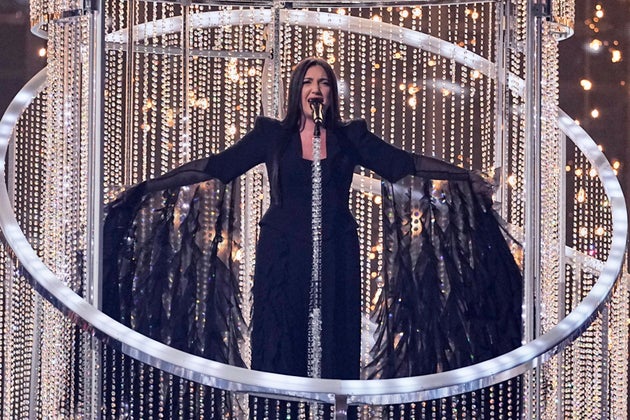 Yuval Raphael on stage at Eurovision 2025
As was the case in 2024, critics once again raised serious questions about Israel’s participation in 2025, with the BDS movement urging people to boycott the contest for the second year in a row.
Shortly before the event got underway last year, a number of past contestants and acts associated with the competition – including several former winners – voiced their support for Israel’s expulsion, while then-reigning winner Nemo also added their voice to these calls during an exclusive interview with HuffPost UK.
“I support the call for Israel’s exclusion from the Eurovision Song Contest. Israel’s actions are fundamentally at odds with the values that Eurovision claims to uphold – peace, unity and respect for human rights,” they said.
When four national broadcasters also aired concerns about Israel’s involvement with the EBU, it was announced that discussions would take place on the matter – but only once Eurovision 2025 was over with.
At the contest’s 2025 red carpet launch in May, a week before the live final, pro-Palestine demonstrators gathered at the site where last year’s acts – including Yuval Raphael herself, a survivor of Hamas’ attack on the Israeli music festival Nova in 2022 – arrived as part of the contest’s official launch.
During this event, Yuval was met with jeers from pro-Palestine demonstrators, with Israel’s public broadcaster Kan also making an official complaint to the police in Switzerland due to an alleged threatening gesture that was made towards her by one of these protesters.
 Yuval Raphael at the Eurovision red carpet launch in 2025
Yuval told BBC News that she’d found this first official day of Eurovision “frightening, even at times uncomfortable”. Like her 2024 predecessor, Eden Golan, she maintained a low profile in the days before her semi-final performance, doing only a handful of media appearances and interviews.
Eurovision bosses confirmed that during Yuval’s final rehearsal for the semi-finals, six pro-Palestine protesters had been removed from the arena after they attempted to detail the performance.
In the end, Israel finished in second place overall at Eurovision 2025. Had only votes from viewers been taken into consideration, they would have won, after securing 12 points from many other countries, including the UK.
Once the competition was over, several competing broadcasters requested an audit of voting, with many also calling for reform into how voting at Eurovision takes place.
Meanwhile, in the days after his win, Austria’s JJ said he also supported the calls for Israel to be banned from Eurovision, stating: “I would like next year’s Eurovision to be held in Vienna, and without Israel. But the ball is in the EBU’s court. We, the artists, can only raise our voices on the matter.”
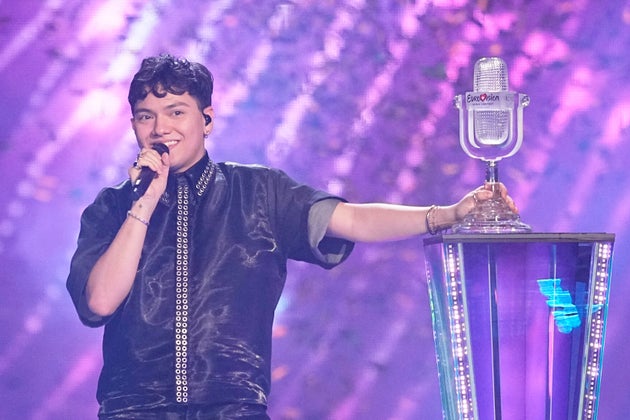 Austrian performer JJ won Eurovision in 2025
Eurovision suffered another drop in ratings in 2025, losing a million UK viewers year-on-year, falling to its lowest overnight audience in a decade.
Which countries have withdrawn from Eurovision in 2026 because of Israel?
In December 2025, member countries of the European Broadcasting Union (EBU) met at a summit to discuss Israel’s future with the competition.
Despite several national broadcasters threatening to withdraw if Israel were invited back, it was once again ruled that the country would stay part of Eurovision, after which Ireland, Spain, The Netherlands, Slovenia and Iceland all confirmed that they wouldn’t be returning for this year’s event.
Ireland’s RTÉ said that “Ireland’s participation remains unconscionable given the appalling loss of lives in Gaza and the humanitarian crisis there which continues to put the lives of so many civilians at risk”, followed by Spain’s RTVE, The Netherlands’ Avotros and Slovenia’s RTVSLO.
The latter said it was “committed to upholding ethical principles and expects that equal rules and standards apply to all EBU members and all participating countries”.
A week later, Iceland’s RÚV withdrew, claiming that “there is no peace or joy connected to this contest as things stand now”.
Eurovision director Martin Green said at the time: “All of us here respect their position and decision. We will continue to work with them as friends and colleagues in the hope they return to the contest soon.”
More recently, it emerged that Spain, Slovenia and Ireland’s broadcasters all had alternative TV scheduling plans over Eurovision season, while Iceland and The Netherlands would air the contest as normal, despite not competing themselves.
The CEO of the Israeli broadcaster Kan has said: “The attempt to remove KAN from the contest can only be understood as a cultural boycott. A boycott may begin today with Israel, but no one knows where it will end or who else it may harm.
“Are EBU members willing to be part of a step that harms freedom of creation and freedom of expression?”
What has happened with Israel so far at Eurovision 2026?
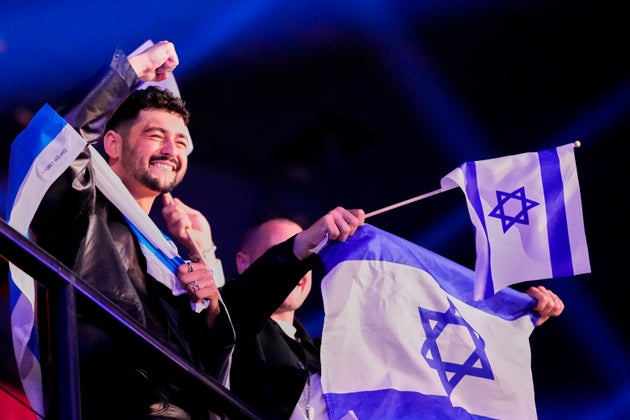 Noam Bettan with other members of the Israeli delegation during the first semi-final of Eurovision 2026
In the lead-up to this year’s event, the BDS movement has doubled down on calls for a boycott, with an open letter condemning the event being published in May, co-signed by musicians like Paloma Faith, Paul Weller, Kneecap, Peter Gabriel and Massive Attack.
Idles, Young Gathers, Nadine Shah, Macklemore and Hot Chip were also among those listed as co-signatories.
Meanwhile, before a single act had even performed, Israel found itself in hot water over a campaign video put together by its broadcaster Kan, encouraging international viewers to vote for its representative Noam Bettan.
Eurovision said in a statement that “employing a direct call to action to vote 10 times for one artist or song is also not in line with our rules nor the spirit of the competition”, and a “formal warning letter” was subsequently sent to Kan.
The contest’s organisers also said it would be continuing “to monitor any promotional activities carefully and take appropriate action where needed”.
In response, A spokesperson for Kan told The Times Of Israel that they were “following all of the rules of the competition”.
Noam Bettan subsequently performed during the first semi-final on Tuesday 12 May.
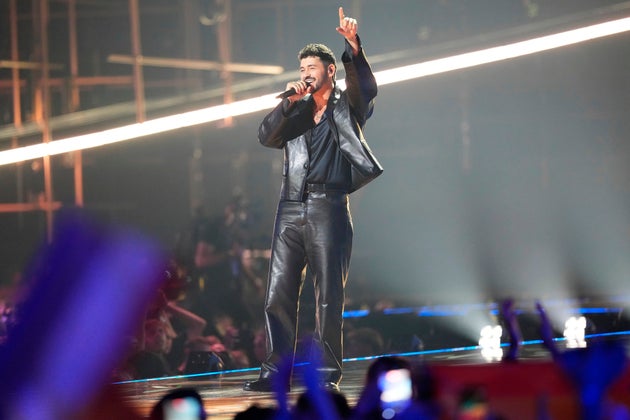 Noam Bettan on stage in Basel earlier this week
Last year, it was widely speculated that Eurovision had made use of technology to censor booing heard in the crowd, which Austrian broadcaster ORF made clear it would not be doing in 2026.
Indeed, early on in Israel’s performance, chants of “end the genocide” (and, reportedly “free Palestine”) could be heard in the crowd, with Eurovision confirming later that at least one audience member had been removed over the incident.
“One audience member, close to a microphone, loudly expressed their views as the Israeli artist began his performance, and during the song, which was heard on the live broadcast,” the EBU and ORF said in a joint statement.
“They were later removed by security for continuing to disturb the audience.”
ORF and the EBU also revealed that three more audience members had also been “removed from the arena by security” for what they described as “disruptive behaviour”.
Unlike San Mario’s rep Boy George – who previously defended his decision to compete at Eurovision despite the ongoing calls for a boycott – Noam Bettan made it through the semi-finals, and will compete in Saturday night’s live final.
Noam later told BBC News he was “aware” of some commotion during his performance.
“I heard there was booing and everything,” he said. “And there was a moment of, like, a wow effect, you know? A little bit of shock.”
He added that, like his predecessors, he’d tried to practise with disruptions to try and prepare himself for different eventualities during the real contest.
Noam noted: “I had a few people in my crew trying to make it hard for me, to practise for this moment – but you can’t really prepare for this.”
What has Eurovision said about all of the controversy around Israel?
Eurovision director Martin Green issued a statement to HuffPost UK in September of last year, at a time when a decision about Israel was yet to be reached, which said: “We understand the concerns and deeply held views around the ongoing conflict in the Middle East. We are still consulting with all EBU Members to gather views on how we manage participation and geopolitical tensions around the Song Contest.”
“It is up to each Member to decide if they want to take part in the Contest and we would respect any decision broadcasters make,” he added.
Organisers previously told HuffPost UK: “The EBU is not immune to global events but, together with our members, it is our role to ensure the Contest remains – at its heart – a universal event that promotes connections, diversity and inclusion through music.
“We all aspire to keep the Eurovision Song Contest positive and inclusive and aspire to show the world as it could be, rather than how it necessarily is.”
They added: “As a reminder, the EBU is an association of public service broadcasters, not governments, who are all eligible to participate in the Eurovision Song Contest every year if they meet the requisite requirements. It is not our role to make comparisons between conflicts.”
Who is representing the UK at the 2026 Eurovision Song Contest?
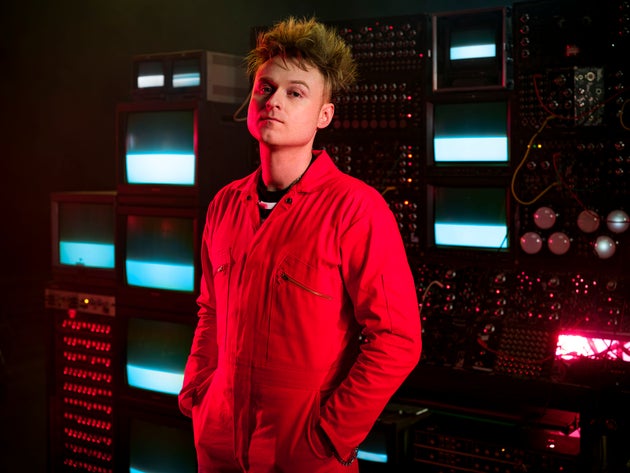 Eurovision star Look Mum No Computer
This time around, the UK is taking a more experimental approach, with Look Mum No Computer (the alias of musician and YouTube personality Sam Battle) set to represent his home country on the Eurovision stage with his song Eins, Zwei, Drei.
Have a listen to the song for yourself below:
The UK forms one of the so-called “Big Four” countries who contribute the most financially to Eurovision, and are therefore guaranteed a spot in the final, without having to compete in the semis.
Spain had also been part of this group before withdrawing from the contest last year.
The 2026 Eurovision Song Contest final will air on Saturday 16 May at 8pm on BBC One.





 Bengali (Bangladesh) ·
  English (United States) ·